

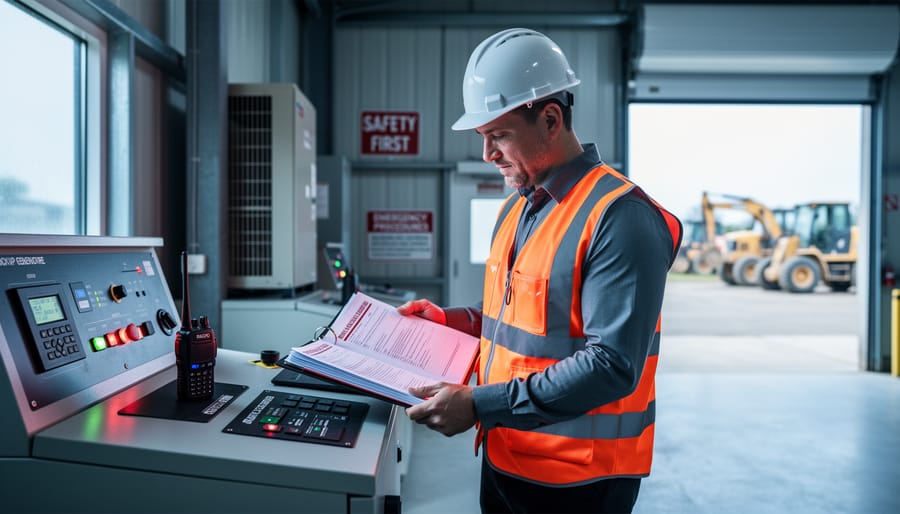
Effective emergency preparedness comes down to nine practices that work together: assess your site’s hazards, write a plan with defined roles, secure backup power, build redundant communications, design evacuation and shelter-in-place into the building, keep supplies current, train through realistic drills, protect critical data and supply chains, and coordinate with local responders while reviewing the plan after every incident. Each one closes a gap that tends to widen quietly between audits.
Why this works is simple. Most facility failures during an emergency aren’t caused by the event itself. They come from an untested assumption: a generator that was never load-tested, a call tree that depends on a single phone system, an evacuation route nobody has walked since the last renovation. Treating preparedness as a connected management system, rather than a binder on a shelf, exposes those assumptions before an incident does.
The tips below are written for organizations and facilities, not households. They’re ordered the way a practical program gets built, starting with risk and ending with continuous improvement. We selected them for relevance to ESH, energy, and sustainability responsibilities, alignment with widely used preparedness and continuity frameworks, and the ability to be started within days, not quarters.
Think of the list as a working checklist. Compare it against what your site does today, and the gaps will be obvious.
The nine tips below were not pulled from a single source or ranked by popularity. They were drawn from widely recognized environmental, safety, health, and continuity frameworks, including ISO 45001 for occupational health and safety, ISO 22301 for business continuity, ISO 50001 energy management practices, and national emergency management guidance. Where these frameworks overlap, the practice is usually proven enough to carry across sites and sectors.
Each tip then had to clear four tests:
Relevance to energy and sustainability operations carried extra weight. Critical load identification, fuel storage, and continuity of environmental reporting sit squarely within the remit of the professionals reading this article.
The tips are deliberately evergreen. They describe practices rather than current events, so they stay useful as conditions change. They are a starting framework, not a compliance checklist. Local regulations, permit conditions, and site-specific risk should always shape how each tip is applied, and your own hazard assessment should decide which ones deserve attention first.
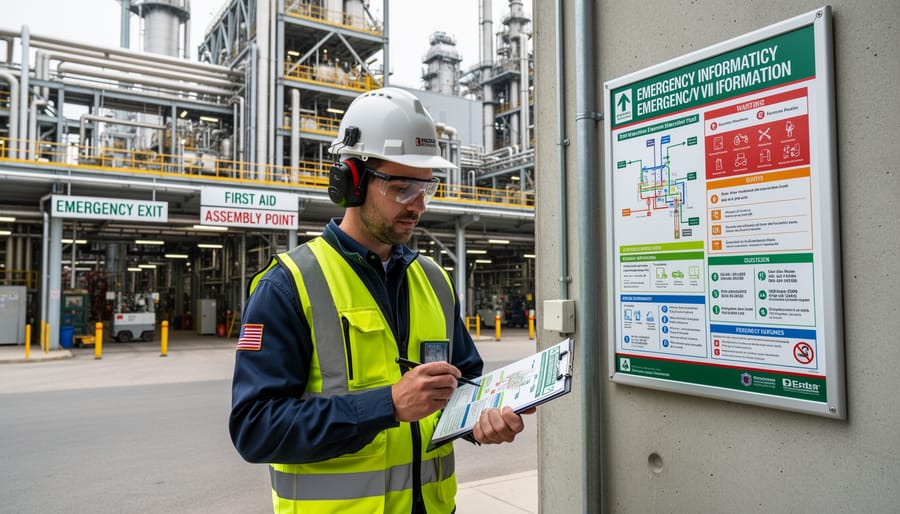
Every effective emergency plan begins with knowing what can actually go wrong at your site. Start by listing natural hazards (flooding, extreme heat, severe storms), technological hazards (fire, chemical release, grid failure, equipment breakdown), and operational hazards tied to your specific processes, such as hot work, hazardous material storage, or reliance on a single power feed.
Then rank each hazard by likelihood and consequence. A flood that happens once a decade but would shut down a substation may outrank a frequent, minor power dip. A structured site-specific hazard risk assessment gives you a repeatable method for scoring these risks and deciding where to focus resources first.
Generic plans fail because they ignore facility-level data. Local topography, building age, proximity to waterways, on-site inventories, and utility dependencies all change the risk picture. Use real incident logs, near-miss reports, and engineering drawings rather than assumptions.
Climate-related risks also shift over time. Heat waves, rainfall intensity, and storm patterns that were rare when your site opened may now be routine, so schedule periodic reviews rather than treating the assessment as a one-time exercise.
A plan that sits in a binder and reads like a policy document will not help anyone at 2 a.m. during a chemical release. The most useful emergency response plans are short, specific, and written for people under stress.
Start with the chain of command. Name an incident commander, state who has authority to order an evacuation or a process shutdown, and list alternates for every key role, including night and weekend coverage. Ambiguity about who decides is where minutes get lost.
Next, define notification triggers in concrete terms. “Alarm sounds” or “gas detector reads above the set threshold” works better than “in the event of a serious incident.” Pair each trigger with a named person to alert, from internal management to regulators and, where required, neighboring facilities.
Shutdown procedures deserve their own one-page checklists: which equipment to isolate, in what order, and who is authorized to do it safely.
Write all of it in plain language. Use short sentences, numbered steps, and consistent terms, and test the draft with someone unfamiliar with the site. If a new contractor can follow it, your team can follow it when it counts.
Power loss is the most common trigger that turns a minor incident into a serious one. Ventilation fails, fire pumps lose pressure, process controls go dark, and monitoring systems stop reporting. Resilience starts with knowing what truly must stay on.
Begin with a critical load register. List every circuit and system whose loss creates a safety, environmental, or regulatory consequence, then rank each one by how long you can tolerate an outage. This is where good energy auditing pays off twice: the metering data and load profiles you gathered for efficiency work show actual demand, so you size backup capacity against reality rather than nameplate guesses.
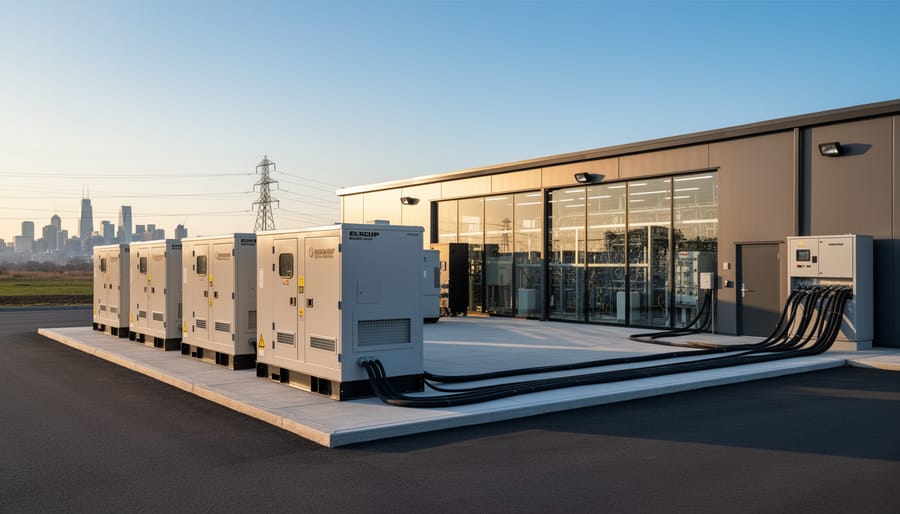
From there, match supply to priority. Generators need enough on-site fuel for your defined runtime, stored in compliant tanks with a rotation plan so it doesn’t degrade. Battery systems and UPS units bridge the gap while generators start and protect sensitive controls. Document load-shedding priorities in advance so operators know exactly what to drop first if capacity falls short.
Then test, because untested backup power is an assumption. Run generators under real load on a fixed schedule, exercise transfer switches, and check battery health. Record the results and fix every failure promptly.
Phones and email are usually the first systems to fail or saturate during an incident, so build communications in layers. Start with mass notification software that pushes alerts by text, voice, and email to employees and on-site contractors. Back it with two-way radios on a dedicated channel, and add a satellite phone or alternate-network option for sites where cellular coverage is unreliable or the local grid may go down. Keep a printed contact tree at the control room, security desk, and each assembly point, because it still works when every screen is dark.
Match each audience to a channel and a message owner. Employees and contractors need clear instructions on what to do now. Regulators often have reporting deadlines, so keep their notification numbers and required timelines in the plan. Neighboring communities and adjacent facilities need prompt, plain-language updates when an event could affect them.
Verify everything on a schedule. Test notification lists quarterly, check radio batteries and charging, and confirm that contact details are current after every staffing change.
Evacuation works best when the building itself does most of the work. Start with egress routes: keep at least two independent paths from every occupied area, avoid dead ends, and make sure doors open in the direction of travel without keys or tools. Assembly points should sit far enough from the structure and from hazardous storage to stay safe, yet remain reachable without crossing vehicle traffic.
Accessibility has to be designed in, not improvised. Provide refuge areas or evacuation lifts for people who cannot use stairs, with a way to communicate their location to responders. Pair these with a buddy system and a documented personal plan for anyone who needs one.
Shelter-in-place needs its own thinking. Identify interior rooms with limited exterior openings, controllable ventilation, and room for the people expected on site. Give each room a clear owner who checks it regularly.
Signage and lighting matter most when conditions are worst. Use photoluminescent or battery-backed exit signs, emergency lighting on all routes, and consistent symbols that work for multilingual workforces and visitors.
The cost curve favors early action. Widening a corridor or relocating a stairwell during a retrofit is far cheaper than fixing it afterward, which is why sustainable design reviews are a natural point to build life-safety features into the plan.
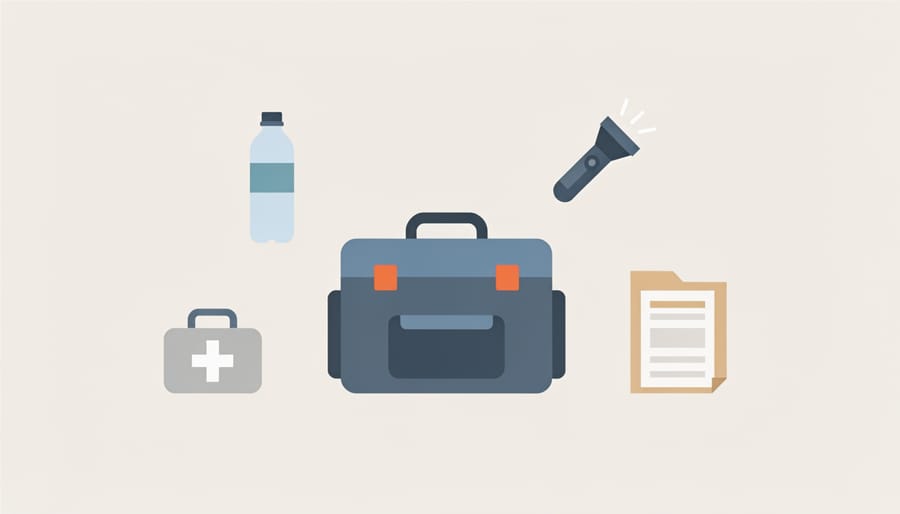
A kit is only useful if it works when someone reaches for it. Most failures in an emergency are boring ones: a spill kit with no absorbent pads, an eyewash station that was never flushed, a flashlight with dead batteries. Start with a core inventory, then assign a named owner and a check interval to each item:
Use a simple register that records location, owner, last inspection, and expiry date, and tag each kit so a gap is visible at a glance. Used spill materials and expired chemicals become waste themselves, so align disposal with your waste management techniques to avoid creating a new compliance problem while restocking.
Training turns a written plan into something people can actually do. Start with orientation, so every employee, contractor, and new hire knows alarm signals, assembly points, and their own role before they ever face a real event. Then move to tabletop exercises, where managers talk through a scenario such as a prolonged grid outage and test decisions, handoffs, and communication without disrupting operations. Once those run smoothly, schedule full-scale drills that put people, equipment, and procedures under realistic pressure.
Make exercises inclusive. Contractors often work alongside your staff but sit outside your training records, so bring them in. Run drills on night and weekend shifts too, since reduced staffing changes who holds decision authority. New hires should complete emergency orientation in their first week, not at the next annual refresher. Reinforcing safety measures through repeated practice helps them become habit rather than paperwork.
Every exercise should end with a documented after-action review. Capture what worked, what failed, and why, then assign each corrective action an owner and a due date. Track those items to closure, and verify the fix in the next drill.
Operational and compliance records are often the first casualty of a facility emergency, and the last thing teams think to protect. Start by mapping which records you cannot operate or report without: permits, monitoring logs, calibration certificates, safety data sheets, maintenance histories, and energy and emissions data. Keep encrypted backups offsite or in a cloud environment, and test restoration on a schedule, because a backup you have never restored is only an assumption.
Environmental reporting does not pause during an incident. Discharge monitoring at a site with wastewater treatment operations, for example, may still require sampling, logging, and timely notification to regulators. Document how data will be captured manually if automated systems fail, and who has authority to file extension requests or incident notifications.
Then look at the supply side. List your single points of failure: one chemical supplier, one fuel vendor, one specialist contractor. Qualify at least one alternate for each critical input, and consider mutual aid agreements with neighboring facilities or industry peers for shared equipment, personnel, and storage during a prolonged disruption.
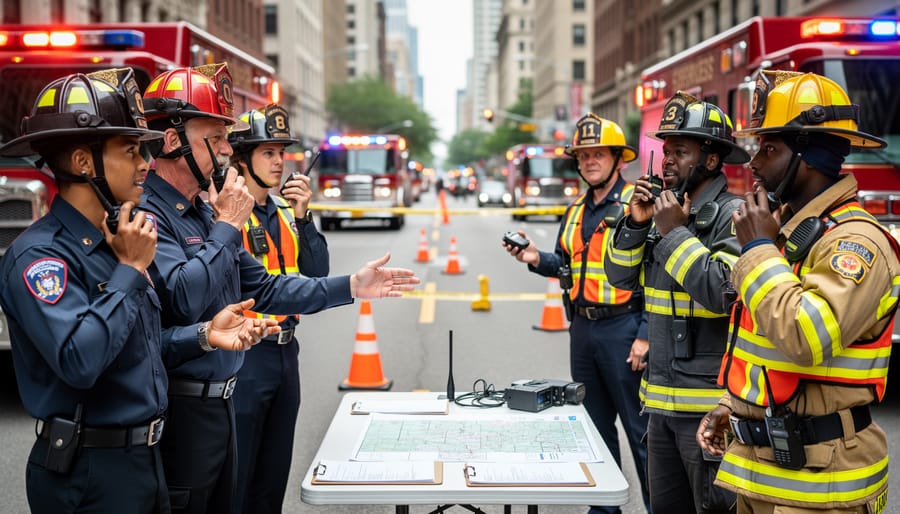
Emergency responders arrive with limited knowledge of your site, so the time to introduce them is long before an incident. Invite local fire services, emergency management agencies, and your electric and gas utilities for a walkthrough. Show them where hazardous materials are stored, how shutoffs work, which gates are staffed, and where your assembly points sit. Provide a concise site information package: floor plans, a chemical inventory, utility isolation points, and 24-hour contact numbers. Review it every year and whenever the facility changes in a meaningful way.
Neighboring facilities deserve the same attention. A release, fire, or outage next door can affect you within minutes, so agree on how you will alert one another and whether any mutual aid arrangements make sense.
Then close the loop. After every drill, near miss, or real event, hold a structured after-action review, and ask what worked, what failed, and why. Assign each corrective action an owner and a due date, and track it to completion. A plan that never changes after an incident is not being used as a learning tool, and the gaps it hides will surface at the worst possible moment.
Consider a mid-sized chemical blending plant (anonymized, and presented as an illustrative composite rather than a documented incident) that lost grid power during a severe storm. Its leadership had recently completed a site-specific hazard assessment, which flagged power loss as a high-consequence scenario because mixing tanks and ventilation systems both depend on continuous electricity.
Several earlier tips made the difference. Because critical loads had been identified through an energy audit, the team knew which systems to keep running on backup generation and which to shed. The written response plan named an alternate incident commander, so the response did not stall when the primary lead was off site. Pre-arranged contact trees and radios carried communication after the mass notification system dropped out.
The gaps were just as instructive. Generator fuel was sufficient on paper, but nobody had tested the transfer sequence under load, and it took longer than expected. Spill response kits were stocked, yet two had expired absorbents, and contractors on the night shift had never been included in drills. Local responders also lacked an up-to-date inventory of stored materials.
Corrective actions followed a clear order. The team scheduled quarterly load-tested generator runs, assigned an owner and inspection date to every emergency kit, added contractors and night crews to the exercise calendar, and shared a current chemical inventory with the fire service.
An ESH practitioner’s perspective: “In most post-incident reviews, the plan was rarely the problem. The weak points are usually testing, ownership, and the people who were never in the room when the plan was written.”
Review it at least annually, and again after any drill, incident, near miss, or significant change to the site, such as new processes, hazardous materials, or staffing. Tip 9 builds this loop in, so every event feeds the next revision.
Start with a simple hazard assessment and a short, plain-language response plan with named roles (Tips 1 and 2). Then add basics like emergency supplies and a tabletop exercise before investing in more complex systems.
ISO 45001 for occupational health and safety and ISO 22301 for business continuity are common reference points, alongside national emergency management guidance. Check your local regulatory requirements, since obligations vary by jurisdiction and industry.
Prioritize spending by risk ranking, funding the highest-consequence gaps first. Backup power planning pairs naturally with energy audits and sustainability programs, since knowing your critical loads (Tip 3) supports both resilience and efficiency goals.
Each answer here is a starting point rather than a prescription. Your own risk profile, regulatory context, and operational scale should shape how you apply it.
Emergency preparedness is not a document you finish; it is a cycle you keep turning. Assess the hazards at your site, plan around what you find, train the people who will carry out the plan, and improve it after every drill, near miss, or real event. Skipping any one of those steps leaves a gap that tends to show itself at the worst possible moment.
No facility has to run that cycle alone. Outside perspective often spots single points of failure that internal teams have stopped seeing, and collaboration with responders, utilities, and neighboring sites makes the plan stronger. If you are unsure where your own gaps are, an ESH consultant can run a gap assessment and help you set priorities for the year ahead.