
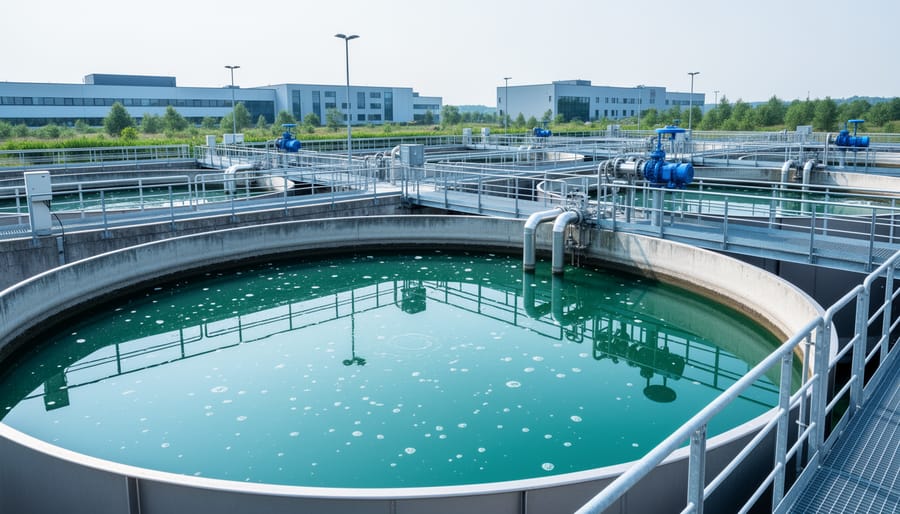
Wastewater treatment is the multi-stage process of removing contaminants from municipal sewage and industrial effluent to produce water safe enough for discharge into the environment or for beneficial reuse. For ESH managers and sustainability professionals, understanding these fundamentals is essential for regulatory compliance, resource recovery, and achieving corporate environmental targets.
Treatment facilities process billions of gallons daily through physical, biological, and chemical methods that collectively protect public health and aquatic ecosystems. The consequences of inadequate treatment extend beyond regulatory penalties. Untreated discharge degrades water quality, disrupts local economies dependent on clean water, and undermines stakeholder trust in an organization’s environmental stewardship.
Modern wastewater management has evolved into a critical component of circular economy strategies. What was once viewed purely as disposal now represents an opportunity to recover energy, nutrients, and reclaimed water. Industrial facilities particularly benefit from understanding treatment basics, as process optimization can reduce discharge fees, lower freshwater intake costs, and support zero-liquid-discharge goals.
This article examines the core treatment stages, from preliminary screening through advanced tertiary processes. You’ll learn how different waste management techniques apply to various facility types, what drives regulatory requirements across jurisdictions, and how leading organizations integrate treatment infrastructure with broader sustainability programs. Case studies illustrate practical applications, while expert perspectives clarify decision points for managers evaluating system upgrades or new installations.
Whether you oversee a corporate campus, conduct compliance audits, or advise clients on environmental strategy, these fundamentals provide the technical foundation for informed wastewater decisions.
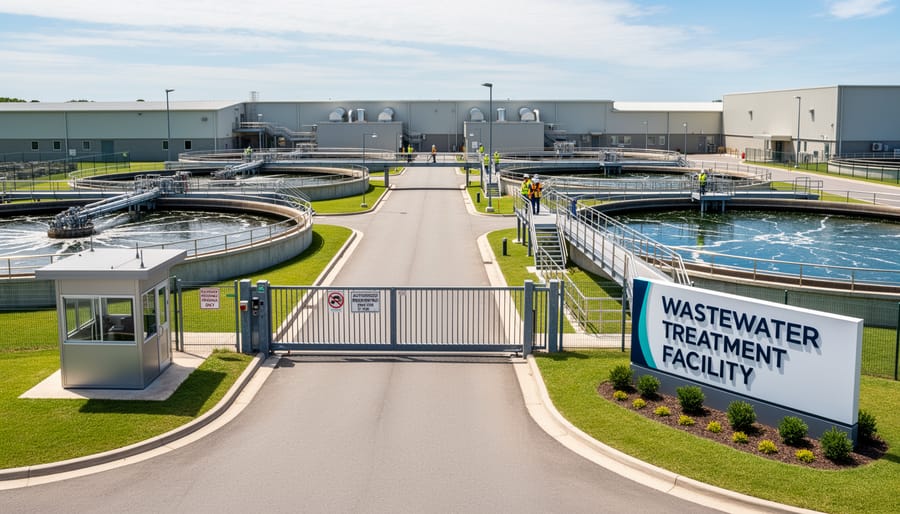
Wastewater treatment is the systematic process of removing contaminants from water discharged by households, businesses, and industrial facilities before that water returns to the environment or enters reuse pathways. For ESH managers and sustainability professionals, understanding this process is essential because it sits at the intersection of regulatory compliance, environmental stewardship, and operational efficiency.
The scope of wastewater treatment extends across three primary source categories. Municipal systems handle domestic sewage from residential areas and commercial districts, processing everything from kitchen sinks to bathroom drains. Industrial facilities generate process water containing chemicals, oils, metals, and organic compounds specific to their operations, manufacturing plants, refineries, food processors, and chemical facilities all produce distinct wastewater profiles requiring tailored industrial wastewater treatment approaches. Commercial sources, including hospitals, restaurants, hotels, and office complexes, contribute wastewater that often combines domestic characteristics with specialized contaminants.
Regulatory compliance drives immediate attention to wastewater management. Facilities must meet discharge permit conditions, monitor effluent quality, and document treatment performance to avoid penalties and maintain operating authorization. Beyond compliance, wastewater treatment increasingly supports corporate sustainability objectives through resource recovery. Modern systems capture biogas for energy production, reclaim nutrients for agricultural use, and produce recycled water that reduces freshwater withdrawal, all strategies that reduce environmental impact while improving cost efficiency. For sustainability managers, wastewater treatment represents both a compliance requirement and an opportunity to advance circular economy principles by transforming waste streams into valuable resources.
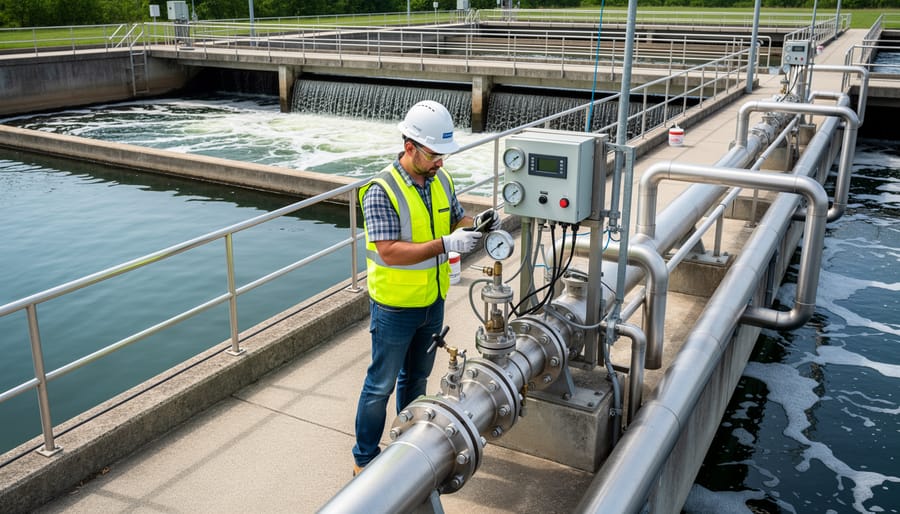
Preliminary and primary treatment form the physical front line of wastewater processing, removing material that would otherwise damage equipment, clog biological reactors, or interfere with downstream treatment stages. These steps require no chemical addition or biological activity, they rely on gravity, mechanical screening, and settling to separate solids from the wastewater stream.
Screening is typically the first process, using bar screens or fine mesh to catch large debris such as rags, plastic, wood, and other coarse objects that enter the collection system. Automated mechanical rakes remove captured material for disposal, preventing blockages in pumps and pipes.
Grit removal follows, targeting sand, gravel, coffee grounds, and other dense inorganic particles that settle quickly. Grit chambers slow the flow velocity just enough for these heavy particles to drop out while keeping lighter organic solids in suspension. Removing grit protects downstream mechanical equipment from abrasion and prevents accumulation in tanks and digesters.
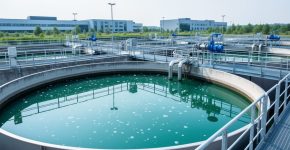
Primary sedimentation takes place in large clarifiers where wastewater moves slowly through settling tanks. Here, gravity pulls suspended solids downward to form primary sludge, while oils and lighter materials float to the surface as scum. Mechanical scrapers collect both fractions for separate handling. The clarified effluent, still containing dissolved organics and fine suspended matter, moves forward to biological treatment, while primary sludge typically advances to digestion or dewatering processes.
Together, these physical stages reduce the organic and solids load entering secondary treatment, improving overall system efficiency and reliability.
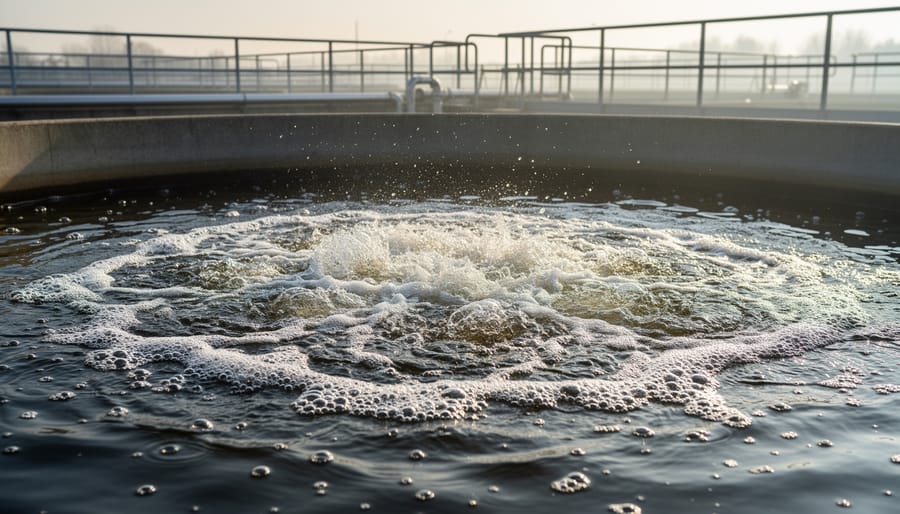
Secondary treatment relies on living microorganisms to consume the dissolved organic matter that passes through primary settling. Bacteria, protozoa, and other microbes metabolize carbon compounds, converting them into carbon dioxide, water, and additional microbial biomass. These aerobic and anaerobic processes operate in controlled environments designed to optimize microbial activity and contaminant removal.
In aerobic systems, oxygen supports bacteria that rapidly break down organic pollutants. The activated sludge process is the most common approach: wastewater enters an aeration basin where air or pure oxygen is continuously supplied, creating conditions for suspended microbial flocs to thrive. These flocs absorb and digest organic compounds as the mixed liquor circulates through the basin. After sufficient contact time, the mixture flows to a secondary clarifier where the biomass settles out. A portion of the settled sludge returns to the aeration basin to maintain a high population of active microbes, while excess sludge is periodically removed for further processing.
Biofilm systems offer an alternative where microorganisms grow attached to media surfaces rather than suspended in the water. Trickling filters distribute wastewater over beds of rock or plastic media, allowing a microbial film to form on the surfaces. As water trickles down, the biofilm consumes organic matter. Rotating biological contactors use partially submerged discs that rotate slowly, alternately exposing the attached biomass to wastewater and air. These fixed-film approaches often require less energy than activated sludge and can handle shock loads more effectively, though they may need larger footprints.
Anaerobic treatment, which excludes oxygen, is particularly useful for high-strength industrial wastewater. Anaerobic bacteria produce methane as they digest organic matter, creating an energy-recoverable biogas while reducing sludge production compared to aerobic methods.
Tertiary and advanced treatment represents the final refinement stage, targeting contaminants that remain after biological processes. These polishing steps become critical when discharge permits impose strict nutrient limits, when receiving waters are sensitive, or when treated effluent will be reused for irrigation, industrial cooling, or even potable applications.
Nutrient removal focuses primarily on nitrogen and phosphorus, which can trigger algal blooms and oxygen depletion in rivers, lakes, and coastal zones. Nitrogen removal typically combines nitrification (converting ammonia to nitrate) with denitrification (converting nitrate to nitrogen gas), often requiring separate aerobic and anoxic zones or specialized reactor configurations. Phosphorus removal may rely on chemical precipitation using alum, ferric chloride, or lime, or on enhanced biological uptake in specially designed systems. The Environmental Protection Agency has documented various approaches to nutrient removal at POTWs that inform facility design and compliance strategies.
Disinfection addresses pathogens before discharge or reuse. Common methods include chlorination (followed by dechlorination to protect aquatic life), ultraviolet light, and ozone. Each carries trade-offs in cost, residual management, and disinfection by-products.
Advanced oxidation processes, membrane filtration (microfiltration, ultrafiltration, reverse osmosis), and activated carbon adsorption tackle trace organics, pharmaceuticals, and specific industrial pollutants. Facility managers select these technologies based on regulatory drivers, effluent destination, and the contaminants present in their specific waste stream. Understanding these options allows ESH professionals to match treatment intensity to actual permit requirements rather than over- or under-designing systems.
Modern wastewater treatment facilities rely on integrated physical infrastructure, biological reactors, and control technologies that work in sequence to remove contaminants and meet discharge standards. For ESH professionals overseeing capital projects or facility upgrades, understanding these core components helps inform equipment selection, budget planning, and operational strategy.
Physical Infrastructure and Separation Equipment
The treatment train begins with robust physical systems designed to handle incoming flows and separate solids. Screening equipment, ranging from coarse bar screens to fine mesh systems, captures debris, plastics, and fibrous material before they damage downstream equipment. Grit chambers use controlled velocity to settle sand, gravel, and other heavy inorganics while keeping organic solids in suspension. Primary clarifiers provide the first major separation stage, using gravity settling in large circular or rectangular tanks to remove suspended solids and floating materials.
Biological Treatment Systems
Secondary treatment relies on reactors that cultivate microbial communities to metabolize dissolved organics. Activated sludge systems circulate mixed liquor through aeration basins where oxygen supports aerobic bacteria, then send the mixture to secondary clarifiers for biomass separation. Membrane bioreactors combine biological treatment with ultrafiltration membranes, eliminating the need for separate clarification and producing higher-quality effluent in a smaller footprint. Trickling filters and rotating biological contactors use attached-growth processes where microorganisms form biofilms on media surfaces. Anaerobic digesters handle sludge stabilization while generating biogas, offering both treatment and energy recovery in a single vessel.
Key System Components
Modern facilities integrate multiple technologies to achieve treatment goals:
Advanced Treatment and Polishing Technologies
Tertiary systems address specific contaminants that biological processes cannot fully remove. Nutrient removal technologies target nitrogen through nitrification-denitrification processes and phosphorus through chemical precipitation or biological uptake. Granular media filters polish effluent to remove residual suspended solids. Advanced oxidation processes use ozone, hydrogen peroxide, or UV light to break down trace organics and pharmaceuticals. Membrane filtration through microfiltration, ultrafiltration, or reverse osmosis produces water suitable for industrial reuse or environmental discharge to sensitive receiving waters.
Process Control and Monitoring Infrastructure
Supervisory control and data acquisition systems integrate sensors, instrumentation, and automated controls throughout the facility. Online analyzers continuously measure flow, pH, dissolved oxygen, turbidity, and nutrient concentrations. Variable frequency drives optimize blower and pump operation based on real-time demand. Remote monitoring capabilities allow operators to track performance, respond to upsets, and document compliance from centralized control rooms or mobile devices, reducing labor requirements while improving process stability.
Wastewater treatment applications divide into two broad domains: municipal systems that serve residential and commercial customers, and industrial facilities that manage process-specific discharge. Each operates under distinct pressures and design constraints shaped by the volume, composition, and regulatory context of the waste stream.
Municipal wastewater treatment plants handle mixed influent from households, businesses, and stormwater networks. The contaminant profile is relatively predictable, organic matter, nutrients, pathogens, and suspended solids, but volumes fluctuate with population density and weather events. These plants typically follow the conventional primary-secondary-tertiary sequence, designed for continuous operation at scale. Municipal operators prioritize reliability, energy efficiency, and meeting community-wide discharge permits. Wet-weather overflows and aging infrastructure present recurring challenges, particularly in older urban systems where combined sewers carry both sanitary waste and stormwater.
Industrial wastewater treatment, by contrast, addresses waste streams shaped by specific manufacturing or processing activities. A food processing plant may discharge high-strength organic loads and fats, oils, and grease. A chemical manufacturer might contend with heavy metals, solvents, or pH extremes. A pharmaceutical facility could face persistent organic compounds that resist conventional biological treatment. These facilities often pretreat wastewater onsite before discharging to a municipal system or design standalone systems to meet direct-discharge standards. Industrial operators must balance treatment performance with production schedules, managing batch discharges and variability in waste composition.
The choice between pretreatment and full onsite treatment depends on discharge agreements, available land, capital budget, and the complexity of the waste stream. Facilities discharging to municipal systems pay surcharges for high-strength waste and must comply with local pretreatment ordinances to protect downstream biological processes. Those with direct discharge permits operate under tighter scrutiny, requiring continuous monitoring and frequent reporting.
Commercial facilities such as hospitals, hotels, and laundries occupy a middle ground, generating wastewater with characteristics that vary by activity but generally align more closely with municipal profiles. Some install package treatment units to manage peak loads or specific contaminants before connecting to the public sewer.
Selecting the appropriate treatment approach requires understanding the waste stream’s chemical and biological makeup, discharge destinations, local regulatory requirements, and operational resources. Mismatches between system design and actual conditions lead to permit violations, equipment failures, and escalating costs.
Wastewater treatment represents one of the most energy-intensive operations within industrial and municipal facilities, creating both significant operational costs and opportunities for sustainability managers to drive environmental impact reduction. The energy demands stem primarily from aeration systems in secondary treatment, pumping throughout the process train, and solids handling operations. However, modern facilities increasingly view wastewater not as waste requiring disposal but as a resource stream containing recoverable energy, nutrients, and water itself.
Energy recovery represents the most mature resource opportunity in wastewater management. Anaerobic digestion of biosolids generates methane-rich biogas that facilities can combust for heat, use in combined heat and power systems, or upgrade to pipeline-quality renewable natural gas. Some advanced systems also capture waste heat from treatment processes to maintain optimal biological activity or support facility heating needs, reducing reliance on purchased energy.
Nutrient reclamation transforms potential pollutants into valuable products. Phosphorus recovery technologies extract struvite or other phosphate compounds suitable for fertilizer production, while nitrogen can be captured through various processes for agricultural applications. These approaches simultaneously reduce nutrient loading to receiving waters and create revenue streams or offset fertilizer purchases for facilities with on-site landscaping or agricultural operations.
Water reuse strategies close the loop on resource management. Treated effluent meeting appropriate quality standards can serve non-potable applications including cooling tower makeup, industrial process water, landscape irrigation, and toilet flushing. This reclaimed water reduces freshwater withdrawal, lowers utility costs, and enhances resilience against water scarcity, particularly valuable in water-stressed regions or for facilities facing allocation limits. Sustainability managers should evaluate which combination of energy recovery, nutrient reclamation, and water reuse aligns with their specific facility constraints, regulatory context, and corporate environmental targets.
Wastewater treatment compliance rests on several interconnected regulatory frameworks that establish minimum standards for protecting water quality. In the United States, the Clean Water Act serves as the foundational statute, prohibiting the discharge of pollutants from point sources without a permit and setting enforceable limits on what facilities can release into surface waters. Under this framework, the National Pollutant Discharge Elimination System permit program requires facilities to obtain authorization before discharging treated effluent, with specific conditions tailored to the receiving water body’s characteristics and designated uses.
Facility managers and ESH professionals carry responsibility for understanding their permit conditions, which typically specify maximum allowable concentrations for parameters such as biochemical oxygen demand, total suspended solids, pH, and nutrients. Permits also define monitoring frequencies, sampling methods, reporting schedules, and recordkeeping requirements. Non-compliance can trigger enforcement actions ranging from administrative penalties to criminal prosecution in cases of knowing violations, making accurate monitoring and timely reporting essential operational priorities.
Beyond federal requirements, state and local agencies often impose additional discharge standards that reflect regional water quality goals or sensitive environmental conditions. Industrial facilities face sector-specific pretreatment standards when discharging to municipal systems, requiring coordination with publicly owned treatment works to prevent pass-through of pollutants or interference with municipal treatment processes. Auditors conducting compliance reviews should verify that facilities maintain current permits, conduct required sampling and analysis using approved methods, submit discharge monitoring reports on schedule, and implement corrective actions when exceedances occur.
Integrating compliance obligations with resource recovery strategies allows facilities to meet regulatory standards while advancing sustainability objectives, transforming wastewater management from a compliance burden into an opportunity for operational improvement and environmental stewardship.
A mid-sized food processing facility in the southeastern United States faced escalating discharge permit violations and rising operational costs tied to its aging wastewater treatment system. The plant generated high-strength wastewater with elevated organic loads and nutrient concentrations, straining the municipal treatment authority’s capacity and triggering compliance notices. Management recognized that without intervention, the facility risked enforcement action, increased surcharges, and reputational damage among sustainability-conscious customers.
The core challenge centered on biological oxygen demand and nutrient levels consistently exceeding permitted discharge limits. The existing system, a basic aeration basin with minimal solids separation, lacked the capacity to handle production increases and seasonal variability in wastewater characteristics. Energy consumption for aeration represented a significant operational expense, yet treatment performance remained inadequate.
Working with the facility’s environmental manager and operations team, the solution involved retrofitting the system with a sequencing batch reactor and installing a membrane bioreactor module for enhanced solids removal. The upgrade incorporated automated process controls to optimize aeration cycles based on real-time influent characteristics, reducing energy waste while improving treatment consistency. A nutrient recovery system captured phosphorus for use as agricultural input, transforming a disposal cost into a modest revenue stream.
Implementation occurred over nine months, with careful staging to maintain production schedules. The facility conducted baseline monitoring before the upgrade and tracked performance metrics throughout commissioning and the first year of operation.
Outcomes demonstrated measurable improvements across compliance, cost, and sustainability dimensions. Discharge permit violations ceased within the first quarter post-startup. The automated controls reduced aeration energy requirements, lowering monthly utility costs. Nutrient recovery diverted material from disposal, cutting sludge handling expenses while generating a small income from phosphorus sales. The facility documented these improvements in its annual sustainability report, strengthening customer relationships and supporting corporate environmental commitments.
This case illustrates how targeted process upgrades address regulatory compliance while advancing operational efficiency and resource recovery goals that matter to ESH professionals and sustainability managers.

Start with your effluent discharge requirements and wastewater characteristics, flow volume, contaminant types, and concentration levels. Match these to treatment technologies that reliably meet permit limits, then evaluate capital and operating costs, space constraints, and your staff’s technical capacity to maintain the system.
Energy consumption for pumping and aeration typically represents the largest ongoing expense, along with chemical inputs, labor for monitoring and maintenance, and sludge disposal. Facilities with biological treatment also face costs for process optimization and periodic equipment replacement.
Wastewater treatment ties directly to water stewardship metrics, regulatory compliance records, and ESG-aligned waste reduction strategies. Resource recovery options like water reuse, biogas capture, and nutrient reclamation create measurable sustainability benefits that strengthen corporate reporting and stakeholder communications.
Frequent challenges include inconsistent influent quality disrupting biological processes, equipment fouling or failure affecting treatment reliability, and difficulty maintaining permit compliance during peak flows or process upsets. Proactive monitoring, operator training, and preventive maintenance programs address most of these issues before they escalate.
Integrating wastewater management into your ESH program starts with establishing clear accountability for permit compliance, routine performance monitoring, and incident response protocols. Document treatment system performance as part of environmental audits, track key metrics for sustainability reporting, and ensure operators understand how their work connects to broader organizational goals. Many facilities find value in cross-training ESH staff on basic treatment operations and involving wastewater specialists in sustainability planning sessions, creating alignment between regulatory requirements and voluntary improvement initiatives.
Understanding the basics of wastewater treatment equips ESH and sustainability professionals to make informed decisions that protect public health, ensure regulatory compliance, and advance environmental stewardship. From preliminary screening through advanced tertiary processes, each treatment stage serves a specific purpose in removing contaminants and recovering resources. The technologies and approaches you select depend on your facility’s discharge standards, operational constraints, and sustainability objectives.
Wastewater treatment isn’t a standalone function. It integrates with broader waste and water management techniques, source reduction, process optimization, water reuse, and energy recovery, to create systems that are both compliant and resource-efficient. Whether you’re managing a municipal utility, overseeing industrial process water, or auditing facility performance, a solid grasp of treatment fundamentals helps you identify improvement opportunities, allocate capital effectively, and communicate value to stakeholders.
The Alliance approaches wastewater management collaboratively, working with clients to assess current performance, navigate regulatory requirements, and design solutions that align with operational realities and long-term sustainability goals. By establishing effective wastewater treatment practices within your comprehensive environmental management strategy, you create resilient systems that safeguard water resources while supporting your organization’s broader ESH commitments.