
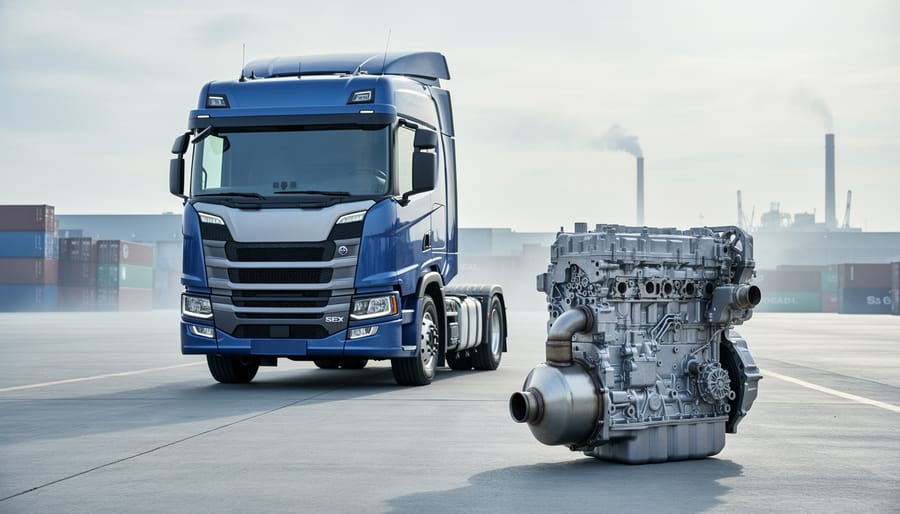
Navigating the Diesel Emission Reduction Act means following a structured application process through the Environmental Protection Agency’s National Clean Diesel Campaign, submitting project proposals during designated funding cycles, and proving eligibility through fleet documentation and emissions calculations. The timeline from application to award typically spans four to six months, with projects requiring verified emissions baselines, certified technology lists, and cost-share commitments ranging from zero to 45 percent depending on applicant type.
DERA has distributed over $1.2 billion in funding since its inception, targeting heavy-duty diesel engines in fleets across public agencies, port authorities, and private operators. The program prioritizes projects in designated air quality non-attainment areas where diesel particulate matter and nitrogen oxides contribute to regulatory exceedances. For ESH professionals and energy managers, DERA represents a direct pathway to fleet modernization without full capital replacement costs, particularly as 2026 funding allocations continue emphasizing school buses, port equipment, and freight switcher locomotives.
The practical challenge lies not in program access but in application precision. Successful applicants demonstrate quantifiable emissions reductions using EPA-approved calculation methodologies, select verified technologies from the Clean Diesel Technology Program list, and align project scope with regional air quality priorities identified in State Implementation Plans. Common disqualifications stem from incomplete fleet inventory data, ineligible engine model years, or failure to document baseline operating conditions.
Understanding DERA’s phased implementation process, from initial eligibility assessment through post-award verification reporting, allows organizations to secure funding while meeting federal air quality mandates. This guide outlines each procedural step with the documentation requirements and technical specifications necessary for competitive applications in current funding cycles.
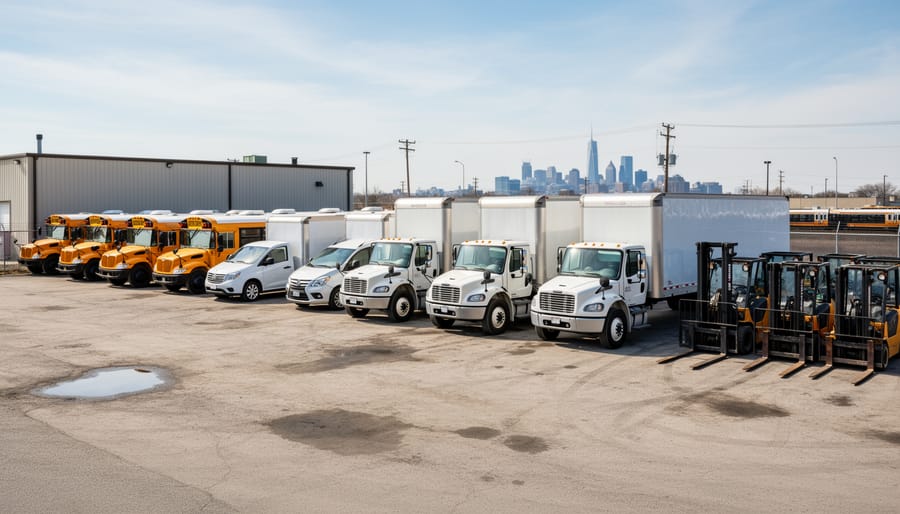
The Diesel Emission Reduction Act operates through a three-tiered funding structure designed to maximize nationwide diesel emission reductions while addressing local air quality priorities. EPA’s Office of Transportation and Air Quality administers the program through annual appropriations distributed across national competitive grants, state and territory allocations, and Tribal government programs. The DERA program overview details how these funding streams work together to support projects ranging from single-vehicle retrofits to comprehensive fleet modernization initiatives.
National grants, typically ranging from $200,000 to $2.5 million per award, target larger-scale projects with significant emission reduction potential. These competitive awards prioritize projects in areas designated as nonattainment or maintenance for particulate matter and ozone standards. State and territory allocations, distributed by formula, enable regional agencies to fund smaller projects that might not compete effectively at the national level but deliver meaningful local air quality improvements. Tribal programs receive dedicated funding to address diesel emissions on tribal lands, with simplified application requirements recognizing resource constraints many tribal governments face.
Eligible applicants include state and local government agencies, tribal governments, nonprofit organizations, and port authorities with jurisdiction over diesel fleets or emission sources. Regional air quality management districts, school districts operating diesel bus fleets, and metropolitan planning organizations also qualify. Private companies cannot apply directly but may participate as subcontractors or equipment lessees under government-sponsored projects.
Qualifying diesel equipment spans on-road and nonroad categories. Heavy-duty trucks, transit and school buses, refuse haulers, and delivery vehicles all meet program requirements, provided they’re model year 1992 or newer. Marine vessels including ferries, tugboats, and workboats qualify, as do switcher and line-haul locomotives. Nonroad equipment encompasses construction machinery, cargo handling equipment, agricultural tractors, and stationary diesel engines used for power generation or industrial processes. Equipment must be operational, domestically operated, and not already scheduled for retirement within three years of project completion to ensure emission reductions persist through the technology’s useful life.
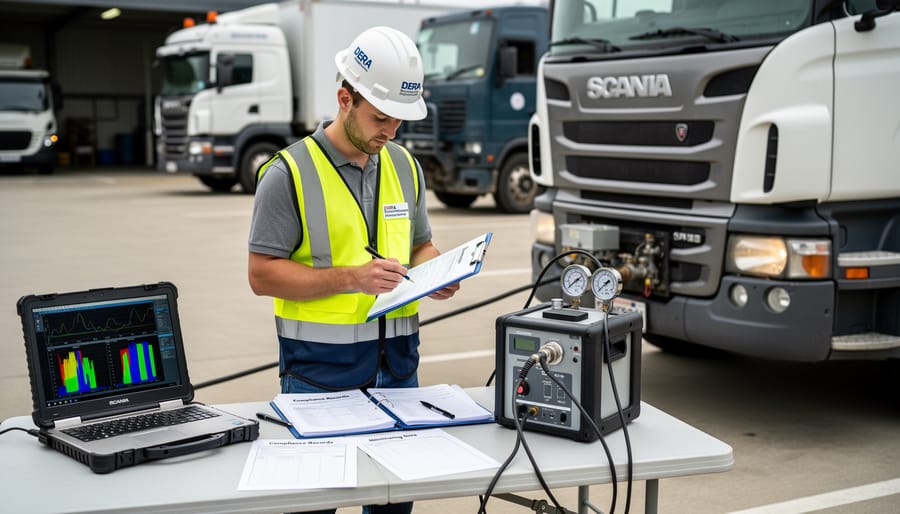
Successful DERA implementation starts with thorough preparation. Organizations must gather specific documentation and leverage specialized tools before launching an application. The difference between funded and rejected proposals often comes down to completeness and data quality in the initial submission package.
Essential Documentation and Data Collection
Before accessing any grant portal, you need a comprehensive baseline of your current diesel fleet operations. Start with a complete equipment inventory that captures make, model, engine year, horsepower ratings, and current usage patterns for every diesel unit in your operation. This inventory forms the foundation of your emissions calculations and determines which equipment qualifies for funding.
Baseline emissions data represents your most critical technical requirement. You’ll need to document current particulate matter (PM) and nitrogen oxide (NOx) output for targeted equipment, typically expressed in grams per brake horsepower-hour or tons per year depending on equipment type. Many organizations underestimate the effort required here, gathering operational hours, fuel consumption records, and load factors takes significant time but drives the entire cost-benefit analysis that reviewers evaluate.
Required Tools and Platforms
EPA’s DERA website provides the official Funding Assistance Program guidance, application templates, and technical bulletins. Many state environmental agencies maintain parallel resources with region-specific priorities and simplified applications for smaller fleets. Regional EPA offices offer pre-application consultations that help identify documentation gaps before submission deadlines, a step that significantly improves first-time applicant success rates.
DERA applications face several automatic disqualifiers that can void funding regardless of project merit. The most common pitfall is using grant funds to reimburse equipment already purchased or installed before award notification, DERA explicitly prohibits retroactive funding. Organizations must also strictly adhere to cost-share requirements, which typically range from 30% to 45% depending on the funding tier and entity type; exceeding the allowable federal share or failing to document matching contributions will result in rejection.
Technology selection presents another critical checkpoint. All retrofit devices and replacement engines must appear on EPA’s verified technologies list at the time of application. Choosing unapproved equipment, even if it performs well in practice, violates program requirements and jeopardizes funding. Similarly, annual application windows operate on fixed schedules (typically closing in late fall or early winter), and late submissions receive no consideration.
Environmental justice considerations now carry significant weight in DERA scoring. Projects benefiting communities with disproportionate diesel exposure, low-income populations, or areas exceeding air quality standards receive priority points. Including a community health impact statement strengthens applications, particularly when aligned with broader waste management and emission reduction strategies.
DERA isn’t appropriate for all scenarios. Fleets with predominantly newer equipment (post-2010 model year) typically demonstrate minimal cost-effectiveness because modern engines already meet stringent emission standards. Similarly, non-diesel equipment, electric vehicles, or natural gas fleets fall outside program scope. Organizations considering full electrification may find alternative funding mechanisms more suitable than DERA’s diesel-focused framework.
Begin with a systematic fleet inventory that documents every diesel-powered asset: engine model year, horsepower rating, annual operating hours, fuel consumption, and current emission control equipment. This baseline establishes your emission reduction potential and determines DERA eligibility, since most programs target pre-2010 engine model years with the highest particulate matter and nitrogen oxide outputs. Prioritize units operating in environmental justice communities or near sensitive receptors like schools and hospitals, as these score higher in competitive grant evaluations.
Identify your highest-emitting equipment using EPA emission factors or direct testing data. A single 1998 line-haul truck typically emits 15-20 times more PM2.5 than a 2010 model, making older units the most cost-effective retrofit candidates. Calculate annual tons of pollutants per vehicle to rank your fleet objectively rather than relying on age alone.
Evaluate verified technologies through EPA’s Diesel Retrofit Technology List. Diesel particulate filters achieve 85-95% PM reduction but require ultra-low sulfur diesel and may need active regeneration systems. Diesel oxidation catalysts cost less upfront but deliver only 20-30% PM reduction. Full engine replacements or repowers offer the greatest emission cuts, often exceeding 90% for both PM and NOx, though they carry higher capital costs and longer installation timelines.
Calculate cost-effectiveness in dollars per ton of pollutant reduced across your shortlisted options. DERA awards typically favor projects demonstrating under $30,000 per ton of combined PM and NOx reductions. Engaging experts who understand the ESH consultancy value often reveals financing structures or technology combinations that improve your competitive position. This four-to-eight-week assessment phase determines whether your application will compete successfully in annual DERA funding cycles.
Once your fleet assessment and technology selections are finalized, you can begin the application phase. This stage typically requires 6-10 weeks and demands meticulous documentation to maximize funding approval chances.
Start by registering your organization in and obtaining a DUNS number if applying for federal DERA grants. State-administered programs may use alternative portals, so verify the correct submission platform early. Next, compile your documentation package: baseline emissions inventory from Phase 1, vendor quotes for verified technologies, fleet ownership records, and proof of operational control over target equipment.
The cost and emission reduction worksheets form the application’s technical core. Calculate total project costs including equipment, installation, and project management. Then determine your emission reductions using EPA-approved methodologies, typically measured in tons of PM2.5, NOx, and CO2 equivalent reduced over the equipment’s remaining useful life. These calculations directly influence your cost-effectiveness score, a primary evaluation criterion.
Secure your cost-share commitment before submission. Most DERA programs require 30-45% non-federal matching funds, though percentages vary by applicant type and project scope. Document your match source, whether organizational budget, other grants, or in-kind contributions, with financial statements or commitment letters.
Follow this sequence for submission:
Annual DERA cycles typically open in late fall with spring deadlines, though state programs may differ. Missing a deadline means waiting another full year, so build buffer time into your preparation schedule. After submission, expect a 60-90 day review period before award announcements.
Once your DERA application receives approval, move quickly to accept the award and execute required agreements within the EPA’s specified timeframe, typically 30 to 90 days. Delayed acceptance can forfeit funding.
Start by finalizing vendor contracts for verified equipment or services. Select only technologies listed on EPA’s verified technology list to maintain compliance. Request detailed procurement quotes that itemize equipment costs, installation labor, and any required system modifications. Most DERA awards mandate competitive bidding for contracts exceeding $10,000, so document your vendor selection process thoroughly.
Schedule installations strategically to minimize fleet downtime. Coordinate with equipment vendors, maintenance facilities, and operational teams to identify low-activity periods for each vehicle or engine. For large fleets, phase installations over several months rather than attempting simultaneous retrofits that could cripple operations.
If your project involves construction or significant installation work exceeding $2,000, Davis-Bacon Act prevailing wage requirements apply. Verify contractor wage rates against Department of Labor standards for your locality and maintain certified payroll records. Non-compliance triggers audit flags and potential fund recovery actions.
Establish rigorous financial tracking from day one. Create dedicated cost centers for DERA expenditures, separate from general fleet maintenance accounts. Document every purchase order, invoice, payment, and in-kind contribution toward your cost-share obligation. Photograph equipment before and after installation, record serial numbers, and maintain installation certificates from vendors.
Plan for six to eighteen months from award acceptance through full deployment, depending on fleet size and technology complexity.
Once your DERA-funded equipment is operational, the real work of documentation begins. The EPA requires systematic tracking to verify that promised emission reductions materialize and that funds were used as approved.
Start by establishing an equipment operation log for each retrofitted or replaced unit. Record operating hours, fuel consumption, maintenance events, and any performance issues. These logs serve as proof that equipment remains in service and operates as intended throughout the mandatory use period, typically five years for retrofits and three years for replacements.
Emission reduction tracking follows EPA’s DERA quantification protocols. You’ll calculate actual reductions based on operating hours, fuel usage, and technology-specific emission factors. Compare these against your baseline projections from the application phase. Most projects submit quarterly reports during the first year, then shift to annual reporting. State and tribal programs may have different cadences, so confirm requirements with your program administrator.
Cost-share documentation demands equal rigor. Maintain receipts, invoices, payroll records for in-kind labor, and proof of any matching funds spent. The EPA can request verification at any point during the project period or through post-award audits.
Final performance reports synthesize the entire project: total emission reductions achieved, cost-effectiveness metrics, lessons learned, and certification that all equipment remains operational. Submit these within 90 days of project completion, though some programs allow up to 120 days.
Missing reporting deadlines or failing to maintain required operation periods can trigger recapture provisions, forcing return of grant funds. Set calendar reminders six months ahead of each reporting deadline and assign clear internal responsibilities for data collection from day one.
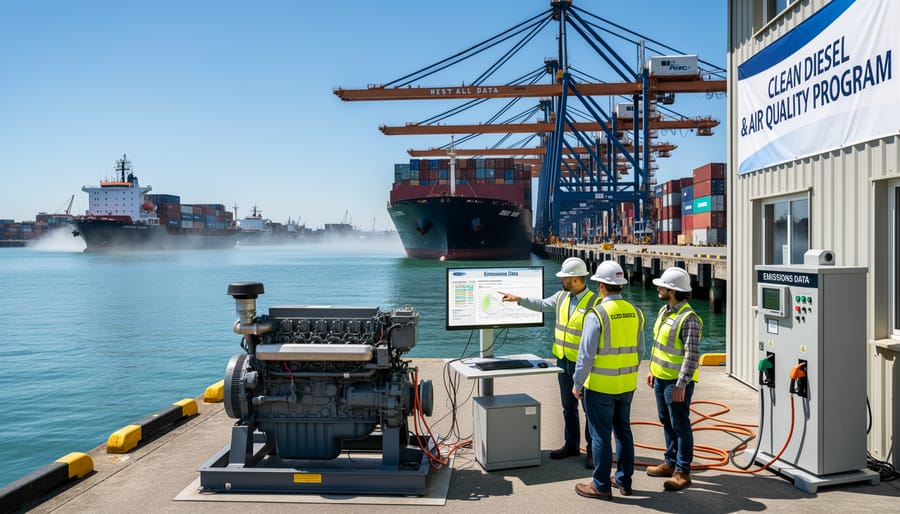
Confirming DERA project success requires rigorous verification across three dimensions: emission performance, cost-effectiveness, and operational compliance. EPA mandates quantifiable proof that funded technologies deliver promised reductions, not just equipment installation receipts.
Start with emission testing protocols. EPA requires baseline and post-retrofit testing using standardized methods such as CFR Title 40, Part 1065 for mobile sources. Third-party certified labs conduct PM2.5 and NOx measurements under controlled operating conditions. For retrofits, testing occurs within 90 days of installation and annually thereafter during the performance period. Engine replacements require certification that new units meet specified emission tiers. Document all testing with chain-of-custody records and laboratory certifications.
Quantifying reductions demands precise calculation. Multiply baseline emission rates (grams per brake horsepower-hour) by annual operating hours and fuel consumption, then compare against post-project measurements. A transit agency replacing 20 pre-2007 engines typically demonstrates 8-12 tons of combined PM and NOx reductions annually. Express results in tons per year for each pollutant category, verified against your original application projections.
Cost-effectiveness verification converts emission reductions into dollars per ton metrics. Calculate total project costs (equipment, installation, monitoring) divided by lifetime pollutant reductions. Competitive DERA projects achieve $15,000-$25,000 per ton for PM reductions. EPA reviews these calculations during performance reporting, similar to efficiency verification in wastewater treatment system upgrades.
Operational compliance requires maintaining equipment usage logs, preventive maintenance records, and proof that retrofitted units remain in service for the committed period, typically 3-5 years. Submit quarterly utilization reports showing minimum annual operating hours. Third-party audits verify cost-share documentation, equipment installation photos, and vendor invoices match award specifications. Failure to maintain operation triggers fund recapture provisions.
The Port of Oakland’s 2024-2025 DERA initiative demonstrates how strategic funding deployment can deliver measurable air quality improvements across multiple equipment categories. Facing significant PM2.5 emissions from aging cargo-handling equipment and drayage trucks serving disadvantaged communities adjacent to port operations, the port authority secured $2.8 million in combined EPA national competitive grants and California state DERA allocations.
Baseline Conditions and Strategic Planning
Prior to implementation, the port’s diesel equipment inventory included 47 rubber-tired gantry cranes averaging 15 years of operation, 230 terminal tractors without emission controls, and coordination agreements with 180 independent drayage truck operators. Annual diesel particulate matter emissions totaled approximately 12.4 tons, with NOx emissions exceeding 340 tons. The port conducted a six-month assessment phase to identify highest-emission units and evaluate verified technology options against operational constraints, including 24/7 terminal operations and limited maintenance downtime windows.
Technology Deployment and Funding Structure
The port selected a tiered approach: Tier 4 engine replacements for 22 rubber-tired gantry cranes, diesel particulate filter retrofits for 180 terminal tractors, and scrappage-and-replacement incentives enabling 85 drayage operators to retire pre-2007 trucks. Total project cost reached $6.2 million, with DERA covering 45%, port funds providing 40%, and participating truck owners contributing 15% for vehicle replacements.
Measured Outcomes and Operational Benefits
Post-implementation emission testing verified 9.8 tons annual PM2.5 reduction and 215 tons NOx reduction, achieving cost-effectiveness of $22,400 per ton of PM2.5 eliminated. Beyond regulatory compliance, the port documented 18% fuel savings from newer engines, reduced maintenance costs averaging $4,200 per unit annually, and improved operational uptime. Environmental justice metrics showed 35% reduction in diesel particulate concentrations in adjacent residential monitoring stations within the first 12 months. The port’s phased approach and detailed documentation positioned the authority favorably for subsequent DERA funding cycles targeting remaining legacy equipment.
Yes, DERA funds can often be stacked with state environmental grants, Volkswagen settlement funds, or utility incentive programs, provided each funding source explicitly permits such combinations and you meet all cost-share requirements. Always verify restrictions in each award agreement and disclose all funding sources during application to avoid disqualification.
You must replace or repair the equipment promptly to maintain compliance, using the same verified technology or an EPA-approved equivalent. Document the failure, corrective action taken, and any downtime in your progress reports. Failure to restore equipment to operational status can trigger repayment obligations.
Most DERA awards require you to operate retrofitted or replaced equipment for a minimum period, typically three to five years. Selling equipment before this commitment expires without prior EPA or state program approval can require partial or full grant repayment. Always review your specific award terms before disposal decisions.
Diesel particulate filters and diesel oxidation catalysts remain highly cost-effective for older engines, typically delivering $15,000 to $30,000 per ton of PM reduced. Engine replacement with Tier 4 Final models offers deeper NOx reductions and integrates with broader fleet modernization and sustainable design strategies, though upfront costs are higher. Cost-effectiveness varies by duty cycle, so calculate dollars per ton reduced for your specific application before committing.
DERA interacts with state emissions regulations in two primary ways. First, it can help you achieve compliance with state-level diesel retrofit mandates or accelerate timelines for meeting stricter local air quality standards. Second, states often administer their own DERA allocations with criteria tailored to regional priorities such as environmental justice areas or nonattainment zones, so check your state program for additional opportunities or streamlined pathways. The federal and state programs operate independently but are designed to complement each other.
When combining funding sources, maintain separate accounting records for each grant and ensure your cost-share contributions are clearly documented and not double-counted across programs. This level of financial transparency protects your organization during audits and positions you for future funding rounds.
The Diesel Emission Reduction Act represents more than a funding opportunity, it’s a cornerstone strategy for organizations committed to measurable air quality improvements and long-term fleet sustainability. ESH professionals who treat DERA as an integrated component of their environmental programs, rather than an isolated grant pursuit, consistently achieve stronger outcomes and position their organizations to reduce environmental impact across multiple operational areas.
Success hinges on early preparation. Annual funding cycles demand proactive planning: baseline emissions assessments, technology evaluations, and cost-share arrangements cannot be assembled at the last minute. Organizations that maintain current fleet inventories and track emerging verified technologies gain decisive advantages when application windows open.
Looking ahead, DERA funding increasingly supports transitions beyond diesel retrofits. Battery-electric and hydrogen fuel cell technologies now qualify under replacement provisions, creating pathways toward zero-emission fleets. ESH professionals who leverage DERA strategically today build institutional capacity and stakeholder buy-in for the deeper decarbonization initiatives that will define the next decade of industrial environmental management.