
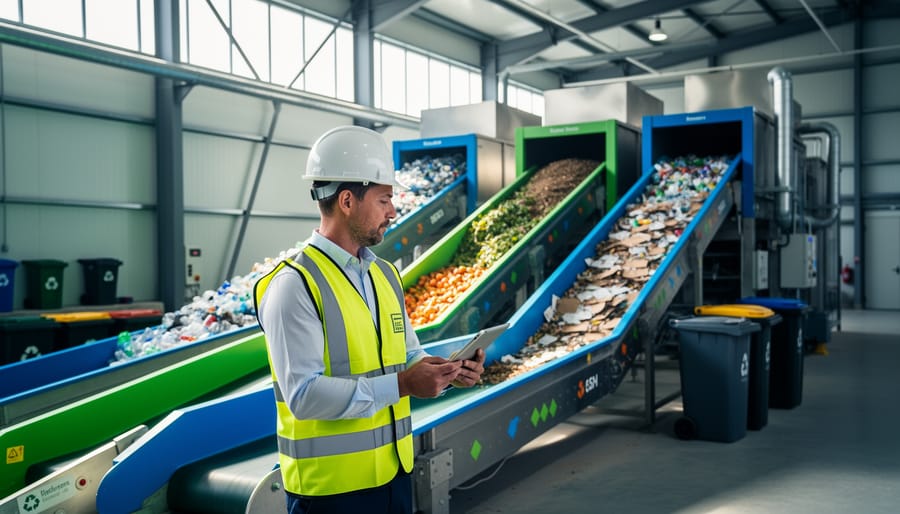
Effective waste management in 2026 hinges on selecting and combining techniques that align with your organization’s waste stream composition, regulatory requirements, and sustainability targets. The right approach integrates source reduction, material recovery, and treatment methods to minimize environmental impact while controlling costs and maintaining compliance.
ESH professionals face mounting pressure to demonstrate measurable waste diversion outcomes as regulatory frameworks tighten and stakeholder expectations evolve. Organizations that implement comprehensive waste management strategies report landfill diversion rates exceeding 75%, alongside significant cost reductions through material recovery and process optimization. The challenge lies not in the availability of techniques, but in matching methodologies to specific operational contexts and scaling them effectively across facilities.
This guide examines eight proven waste management techniques that address the full hierarchy of waste handling, from prevention through disposal. Each technique includes implementation parameters, performance metrics from real-world applications, and expert insights on overcoming common adoption barriers. The analysis draws on case studies from manufacturing, municipal, and commercial sectors to illustrate how organizations achieve compliance while advancing circular economy objectives.
Understanding the selection criteria upfront allows ESH teams to build waste management programs that deliver both environmental and financial returns. The techniques covered span mechanical, biological, thermal, and chemical processes, with particular attention to integration points where waste and water management intersect. Whether you’re developing a new program or optimizing existing infrastructure, the methods detailed here provide the technical foundation for strategic decision-making in waste reduction and resource recovery.
Selecting the right waste management technique requires a structured evaluation framework that balances operational requirements with environmental and financial objectives. ESH professionals must assess multiple dimensions simultaneously, as no single technique universally suits all waste streams or organizational contexts.
The evaluation process begins with waste stream characterization. Before committing to any technique, conduct a thorough audit of waste volume, composition, contamination levels, and generation patterns. A manufacturing facility producing primarily metal scraps faces different technical requirements than a food processing plant generating organic waste, and your selection criteria must reflect these fundamental differences.
When evaluating potential techniques, consider these essential criteria:
Cost-effectiveness extends beyond the initial purchase price. Factor in lifecycle costs, including maintenance, consumables, energy consumption, and disposal fees for residual waste. A technique with higher upfront costs may deliver superior long-term value through reduced operating expenses or revenue from material sales.
Scalability deserves particular attention in growing organizations. A composting system adequate for current organic waste volumes may require significant capital investment to expand later, whereas modular technologies allow incremental scaling. Similarly, assess whether the technique accommodates waste stream variability without performance degradation.
The regulatory landscape shapes technique selection profoundly. Hazardous waste treatment demands specialized permits and monitoring protocols that organic waste processing does not. Verify that your chosen technique meets current regulations and can adapt to anticipated regulatory changes, particularly in jurisdictions implementing stricter extended producer responsibility frameworks or circular economy mandates.
Source reduction represents the most cost-effective tier in the waste management hierarchy by eliminating materials before they enter the waste stream. Rather than managing waste after generation, prevention-first strategies address root causes through deliberate process redesign and material specification changes.
Process optimization begins with comprehensive waste audits that map material flows and identify generation points. Manufacturing facilities frequently discover 15-30% waste reduction potential through simple adjustments: tightening quality control to reduce defective products, recalibrating equipment to minimize off-specification batches, and standardizing packaging specifications to eliminate excess materials. One automotive parts manufacturer reduced scrap metal generation by 23% through precision cutting optimization and real-time quality monitoring.
Material substitution targets high-volume or problematic waste streams by replacing them with alternatives that generate less waste or enable easier recovery. This includes switching from solvent-based to water-based formulations, adopting reusable containers instead of disposable packaging, and specifying materials with higher recycled content that support circular supply chains.
A chemical processing facility documented their prevention approach: substituting bulk delivery systems for drummed chemicals eliminated 3,400 steel drums annually, while reformulating cleaning agents reduced hazardous waste generation by 67%. The facility achieved payback within 14 months through avoided disposal costs and reduced regulatory reporting burdens. These prevention strategies require upfront investment in process analysis but deliver sustained operational and environmental returns.
Material recovery programs systematically capture, process and return waste materials to productive use through established collection, sorting and reprocessing infrastructure. Effective implementation begins with source-separated collection systems that maintain material purity from the point of generation, single-stream approaches may increase participation but typically reduce recovery rates by 5-15% due to cross-contamination. The material segregation importance extends beyond collection into processing facility design, where automated optical sorting and density separation systems can achieve 95% purity levels for high-value streams like PET and HDPE plastics.
Contamination prevention requires clear colour-coded labelling, regular audits of collection points, and staff training on accepted materials, industrial facilities typically see 20-30% contamination rates drop to below 5% within six months of targeted education programs. Closed-loop systems, where recovered materials return directly to the originating manufacturing process, deliver the highest environmental and economic value. Automotive manufacturers, for instance, now integrate 25-40% recycled aluminium into new vehicle production.
Recovery rate optimization balances convenience with material quality. Multi-material baling systems reduce transportation costs while maintaining segregation, and establishing partnerships with certified processors ensures materials actually reach end markets rather than diversion to landfill. ESH professionals should track diversion rate, contamination percentage and revenue per tonne as key performance metrics.
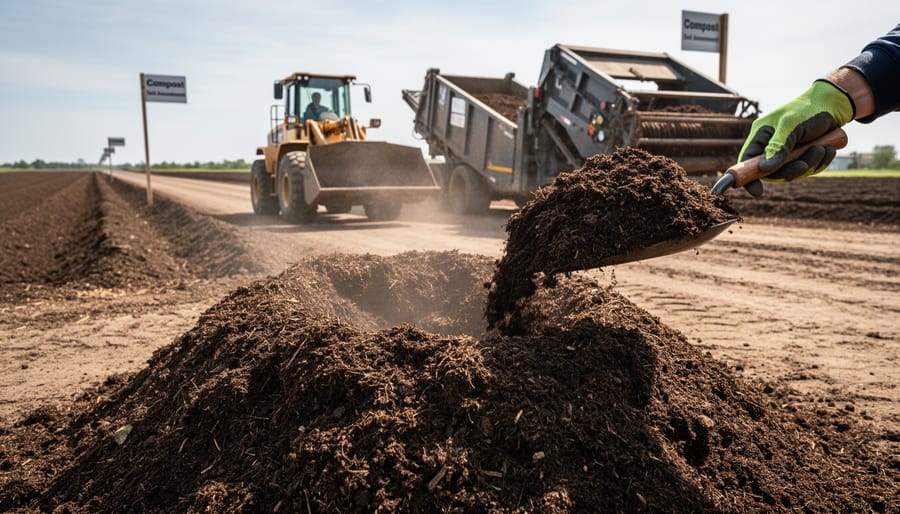
Composting transforms organic waste into valuable soil amendments through controlled biological decomposition, offering dual benefits of waste reduction and resource recovery. Industrial facilities generate substantial organic waste streams from cafeterias, landscaping operations, and certain manufacturing processes that are ideal candidates for composting programs.
Aerobic composting relies on oxygen-dependent microorganisms to break down organic matter, typically requiring active management of moisture content, temperature, and aeration. Windrow systems and aerated static piles are common at industrial scales, processing volumes from 500 to 5,000 tons annually. These systems reach thermophilic temperatures of 55-65°C, eliminating pathogens and weed seeds while producing finished compost in 8-12 weeks.
Anaerobic digestion occurs in oxygen-free environments, generating biogas as a valuable byproduct. Enclosed digesters handle wet organic waste streams with 80-95% moisture content, producing methane-rich biogas for energy recovery while creating nutrient-dense digestate. This approach integrates effectively with wastewater treatment systems, co-processing sludge with food waste to optimize biogas yields.
Key operational parameters include maintaining carbon-to-nitrogen ratios between 25:1 and 30:1, controlling moisture at 50-60% for aerobic systems, and monitoring pH levels. Leachate capture systems prevent groundwater contamination, with collected liquids recirculated or treated through existing wastewater infrastructure. Industrial operations report 60-70% volume reduction and demonstrate ROI within 3-5 years through avoided disposal costs and compost sales.
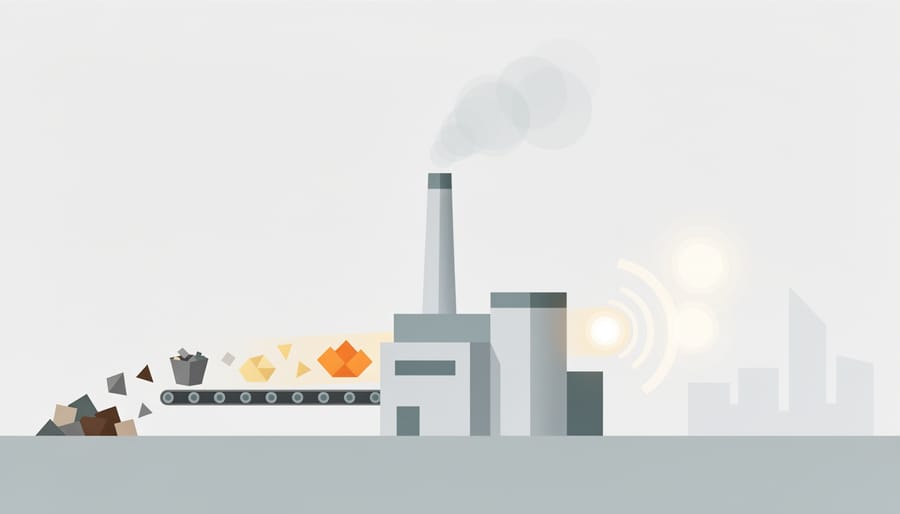
Waste-to-energy conversion transforms non-recyclable materials into usable heat, electricity, or fuel, offering a dual benefit of volume reduction and resource recovery. Thermal treatment technologies fall into three primary categories, each with distinct operational characteristics and environmental profiles.
Incineration, the most widely deployed method, combusts waste at temperatures between 850°C and 1,200°C. Modern facilities incorporate advanced energy recovery emissions controls including scrubbers, baghouse filters, and selective catalytic reduction systems to meet stringent air quality standards. Typical energy recovery rates reach 550-670 kWh per tonne of waste processed.
Gasification converts waste into synthesis gas through partial oxidation at 700°C to 1,000°C. This process produces a cleaner fuel stream than traditional incineration, with lower particulate and dioxin formation. The syngas can power turbines directly or undergo further processing into liquid fuels.
Pyrolysis uses thermal decomposition in oxygen-starved environments at 400°C to 800°C, producing bio-oil, syngas, and char. This technique suits mixed plastics and contaminated biomass that challenge conventional recycling.
Each technology requires rigorous emissions monitoring, ash management protocols, and feedstock characterization. Energy recovery potential varies with waste composition, with higher calorific materials yielding better conversion efficiency. Site-specific regulatory frameworks dictate permitting requirements and stack emission limits.
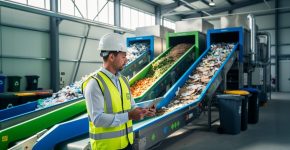
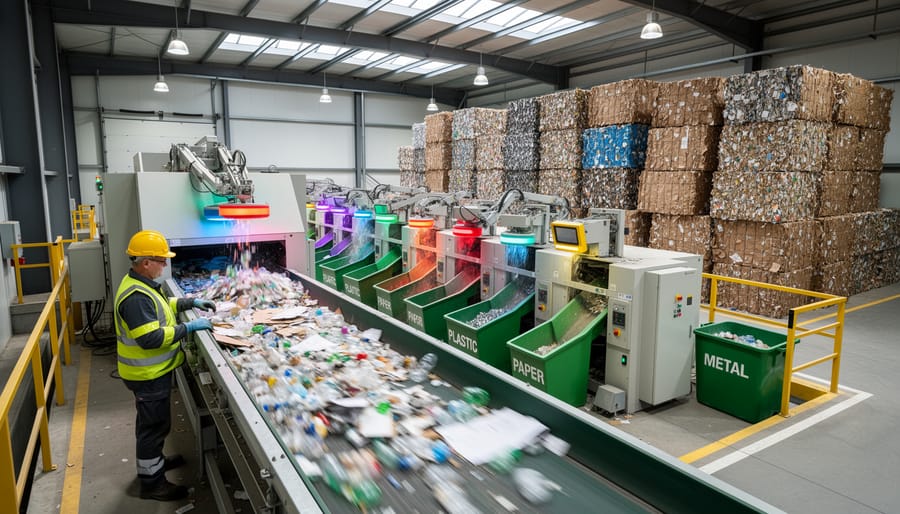
Advanced sorting and separation technologies represent a critical evolution in waste management, enabling facilities to achieve material recovery rates exceeding 95% in optimized operations. These systems combine automated sensors with strategic manual sorting stations to extract maximum value from mixed waste streams while reducing contamination that compromises recyclable materials.
Near-infrared (NIR) optical sensors identify materials by analyzing reflected light signatures, distinguishing between different plastic polymers, paper grades, and composite materials at processing speeds of 2-3 meters per second. Modern facilities layer this technology with X-ray transmission sensors for metal detection and hyperspectral imaging for organic matter identification. AI-driven sorting platforms learn material characteristics over time, adapting recognition algorithms to regional waste composition variations and seasonal changes in waste streams.
Magnetic separation systems extract ferrous metals through drum magnets and eddy current separators remove non-ferrous aluminum and copper. Air classification separates materials by density, directing lightweight films and paper away from heavier containers and glass.
The integration challenge lies in configuring these technologies for specific waste streams. A municipal recycling facility requires different sensor arrays than an industrial waste processor handling construction debris. Facilities achieving top-tier recovery rates typically employ 4-6 sorting technologies in sequence, with manual quality control stations positioned after automated sorting to catch misclassified items and remove persistent contaminants.
Chemical and hazardous waste requires specialized handling protocols that exceed standard waste management practices. Industries generating hazardous materials, including manufacturing facilities, laboratories, healthcare institutions, and chemical plants, must implement treatment methods that neutralize toxicity before disposal.
Neutralization involves adjusting pH levels of acidic or alkaline waste streams to render them non-hazardous. This process typically occurs in dedicated treatment vessels with continuous monitoring to ensure complete reaction. Stabilization techniques bind hazardous constituents within a solid matrix, preventing leachate formation and environmental contamination. Chemical fixation using cement-based binders or polymer encapsulation creates stable compounds suitable for landfill disposal.
Treatment selection depends on waste characteristics, volume, and regulatory classification. RCRA guidelines in the United States and similar frameworks globally mandate specific handling, storage, and disposal requirements based on hazard categories. Facilities must maintain detailed manifests tracking waste from generation through final disposal, the “cradle to grave” documentation requirement.
Safety considerations include proper personal protective equipment, ventilation systems, and emergency response protocols. Secondary containment prevents spills from reaching soil or groundwater. Regular staff training on chemical compatibility, reaction hazards, and exposure limits reduces incident risk. Third-party certified treatment facilities provide compliant disposal options for organizations lacking in-house capabilities.
Modern engineered landfills bear little resemblance to the open dumps of decades past. Today’s facilities function as complex containment systems designed to isolate waste from surrounding ecosystems while capturing valuable resources.
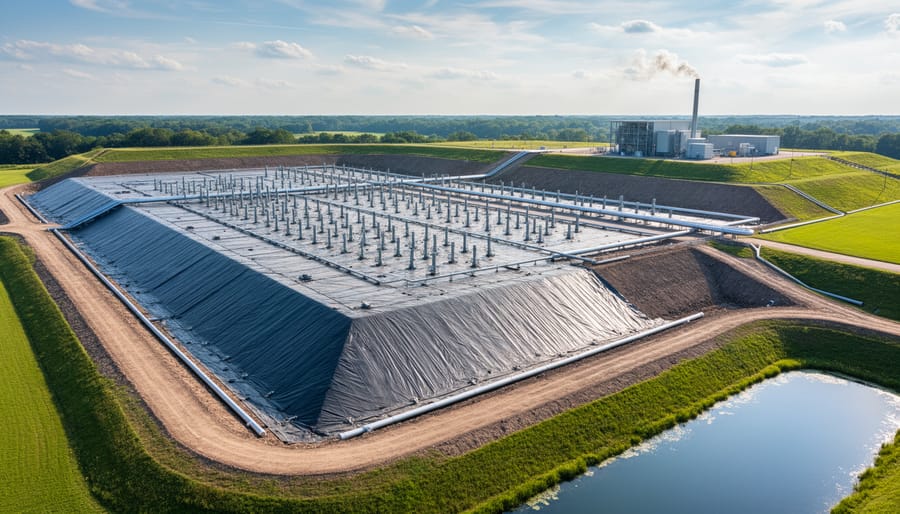
The foundation starts with multi-layer liner systems, typically combining geosynthetic clay liners with high-density polyethylene membranes, that prevent leachate from contaminating groundwater. Above this, engineers install sophisticated drainage networks that collect and route leachate to treatment facilities, often integrating with broader water management infrastructure. This dual focus on containment and treatment addresses one of landfill management’s most persistent environmental challenges.
Methane capture represents another critical optimization strategy. As organic materials decompose anaerobically, they generate landfill gas composed of roughly 50% methane. Modern facilities deploy vertical extraction wells connected to vacuum systems that pull this gas to power plants or processing units. A well-designed gas collection system can capture 75-85% of generated methane, simultaneously reducing greenhouse gas emissions and generating renewable energy.
Long-term monitoring protocols extend decades beyond active operation. Continuous sensors track groundwater quality, surface settlement, gas migration, and cap integrity. This data informs adaptive management decisions, ensuring landfills remain environmentally secure throughout their operational lifecycle and post-closure monitoring period. For facilities handling industrial waste streams, enhanced monitoring requirements often integrate with centralized environmental management systems.
Circular economy integration transforms traditional waste management from a linear disposal model into a regenerative system where materials retain value throughout their lifecycle. This systematic approach requires organizations to redesign processes, products, and partnerships to eliminate waste conceptually rather than simply managing it after generation.
Industrial Symbiosis Networks
Industrial symbiosis creates value by connecting organizations whose waste outputs serve as feedstock for other operations. Manufacturing facilities exchange byproducts, heat, water, and materials through formalized networks. A chemical plant’s waste steam becomes energy for an adjacent food processing facility, while the food processor’s organic waste supplies a local composting operation. These networks reduce virgin material consumption by 15-30% while cutting disposal costs significantly.
Product Lifecycle Extension Strategies
Extending product lifecycles through refurbishment, remanufacturing, and component recovery prevents premature disposal. Electronics manufacturers now design for disassembly, enabling component harvesting and material reclamation. Modular design principles allow selective replacement of worn parts rather than complete product disposal, reducing material throughput by up to 60% in mature programs.
Case Study: Kalundborg Symbiosis
Denmark’s Kalundborg industrial park demonstrates circular economy success at scale. Nine public and private enterprises exchange 30 different waste streams, including water, energy, and materials. The symbiosis prevents 635,000 tons of CO₂ emissions annually while generating €24 million in economic value. Participants report 20-25% reductions in resource costs and enhanced regulatory compliance through collaborative waste reduction initiatives.
Successful deployment of waste management techniques requires careful orchestration across technical, organizational, and regulatory dimensions. Energy and sustainability professionals must evaluate multiple factors simultaneously: current waste stream composition, available capital and operating budgets, site-specific infrastructure constraints, and alignment with existing environmental management systems. Begin with a comprehensive waste audit to establish baseline generation rates and contamination patterns. This data becomes your foundation for technique selection and performance tracking.
Stakeholder engagement separates successful programs from stalled initiatives. Operations teams, procurement staff, facilities management, and finance all play critical roles. Conduct workshops to identify concerns before rollout, and assign clear ownership for each implementation phase. Procurement decisions should balance upfront costs against lifecycle value, considering maintenance requirements, operator training needs, and compatibility with existing systems. Request pilot programs or vendor demonstrations rather than committing to full-scale deployments without proof of concept.
Phase your rollout strategically. Target high-volume waste streams first where interventions deliver visible impact quickly. These early wins build organizational momentum and justify further investment. Establish key performance indicators tied to waste diversion rates, contamination levels, and cost per tonne processed. Monitor monthly and adjust tactics based on real performance data. Common pitfalls include insufficient operator training, underestimating ongoing maintenance demands, and failing to integrate waste management protocols into standard operating procedures. Address these proactively by embedding waste reduction targets into departmental goals and recognition programs.
Choosing the right waste management approach from these eight techniques hinges on three core factors: your organization’s waste stream composition, operational constraints, and sustainability targets. Start by conducting a comprehensive waste audit to identify the volume, type, and generation patterns of your materials. This data determines which techniques align with your actual needs, high organic content points toward composting systems, while diverse material streams favor advanced sorting technologies.
Consider implementation feasibility alongside environmental impact. Source reduction delivers the highest return on investment but requires process redesign and cultural change. Material recovery programs offer moderate capital costs with measurable diversion rates, while waste-to-energy systems demand substantial upfront investment but provide dual benefits of disposal and power generation. Assess your facility’s infrastructure, available space, workforce capabilities, and budget constraints to narrow viable options.
The most successful programs combine multiple techniques rather than relying on a single approach. A manufacturing facility might implement source reduction protocols, establish material recovery systems for production scrap, and reserve landfill optimization for residual waste that cannot be diverted. This layered strategy maximizes resource recovery while maintaining operational flexibility.
Source reduction and recycling programs typically show positive returns within 12-24 months through reduced disposal costs and material sales. Capital-intensive technologies like waste-to-energy systems require 5-7 years for payback but generate long-term revenue streams.
EPA Resource Conservation and Recovery Act (RCRA) establishes federal standards for hazardous and non-hazardous waste. State and local regulations often impose additional requirements for specific techniques, particularly landfills, incineration, and hazardous waste treatment.
Yes, most techniques complement existing environmental management systems. Align new waste initiatives with current ISO 14001 protocols, safety procedures, and reporting frameworks to streamline implementation and leverage established compliance infrastructure.
Watch chemical recycling advances that break plastics into base molecules, AI-powered waste characterization systems that improve sorting accuracy, and biochar production from organic waste streams. These technologies are moving from pilot to commercial scale deployment.
Regulatory landscapes continue evolving toward stricter diversion mandates and extended producer responsibility requirements. The techniques you select today must accommodate tightening standards while supporting your organization’s broader decarbonization and circular economy commitments. Prioritize adaptable systems that can scale with changing waste volumes and integrate new processing technologies as they mature.
Minimize waste generation at the source through process optimization, material substitution, and lean manufacturing principles that eliminate unnecessary consumption before waste streams develop.
Implement comprehensive recycling systems with material segregation protocols, contamination prevention measures, and closed-loop processes that maximize resource recovery rates.
Deploy aerobic and anaerobic composting systems for organic waste streams, creating valuable soil amendments while reducing landfill dependency and methane emissions.
Utilize thermal treatment processes including incineration, gasification, and pyrolysis to recover energy from non-recyclable waste while managing emissions within regulatory limits.
Leverage automated systems with optical sensors, AI-driven identification, and magnetic separation to increase material recovery efficiency and purity.
Apply specialized treatment protocols including neutralization, stabilization, and secure disposal for hazardous materials with full regulatory compliance.
Design engineered landfills with leachate management, methane capture systems, and long-term monitoring to minimize environmental impact.
Develop systematic approaches for resource recovery through industrial symbiosis, product lifecycle extension, and materials marketplace participation.
Selecting the right waste management techniques isn’t just an operational decision, it’s a strategic imperative that directly impacts your organization’s environmental footprint, regulatory compliance, and bottom line. The eight techniques we’ve examined represent proven approaches that ESH professionals can adapt to their specific contexts, whether you’re managing industrial waste streams, implementing circular economy principles, or optimizing existing disposal operations.
The most effective waste management programs don’t operate in isolation. They function as integrated components of broader Waste and Water Management Techniques systems, where waste reduction efforts complement water conservation initiatives and resource recovery supports energy management goals. This interconnected approach amplifies sustainability outcomes while improving operational efficiency.
Now is the time to critically evaluate your current waste management practices. Conduct a waste audit to identify your highest-impact opportunities. Benchmark your performance against industry leaders. Engage stakeholders across operations, procurement, and finance to build support for necessary changes. Start with one technique that aligns with your immediate needs and regulatory requirements, then expand systematically.
The techniques exist. The benefits are documented. What remains is implementation. Your organization’s environmental legacy depends on the decisions you make today.