
A methane emission reduction program is a structured set of policies, technologies, and operational practices designed to identify, measure, and minimize methane releases from industrial facilities, energy infrastructure, and waste operations. For ESH professionals and energy managers, these programs typically combine leak detection and repair protocols, equipment upgrades, operational modifications, and continuous monitoring systems to achieve reductions of 40 to 70 percent within the first three years of implementation.
The urgency behind these programs stems from methane’s outsized climate impact. Pound for pound, methane traps 84 times more heat than carbon dioxide over a 20-year period, making it a priority target for organizations committed to meaningful emission reductions. Oil and gas operations, landfills, wastewater treatment plants, and agricultural facilities account for the majority of anthropogenic methane releases, yet many of these sources remain inadequately monitored or controlled. Regulatory pressure has intensified accordingly. Federal reporting requirements under the Greenhouse Gas Reporting Program now mandate quarterly methane data submissions for covered facilities, while state-level programs in Colorado, California, and Pennsylvania impose even stricter leak detection intervals and repair timelines.
Beyond compliance, the financial case for methane programs has strengthened considerably. Captured methane represents recoverable energy that can offset operational costs or generate revenue through sale or on-site use. Companies implementing comprehensive programs report payback periods of two to four years when accounting for avoided regulatory penalties, recovered product value, and reduced carbon offset purchases. Insurance carriers and investors have also begun factoring methane management into risk assessments and ESG scorecards, creating additional financial incentives for proactive program development.
This article provides a systematic framework for designing and implementing methane emission reduction programs within industrial settings. We examine the technical components that drive measurable results, regulatory requirements shaping program scope, step-by-step implementation strategies, and validated case studies demonstrating real-world outcomes. Whether you’re building a program from the ground up or refining existing controls, the guidance that follows addresses both strategic planning and tactical execution.
Industrial methane emissions originate from four primary sectors, each presenting distinct technical challenges and reduction opportunities for ESH professionals developing emission control strategies.
Oil and Gas Operations
The petroleum industry represents the largest industrial methane source, with emissions occurring throughout the value chain. Upstream operations leak methane during drilling, well completion, and production through equipment fugitives, pneumatic devices, and venting practices. Natural gas processing facilities emit methane through compressor seals, dehydration units, and flaring inefficiencies. Transmission and distribution systems contribute additional losses through pipeline leaks, compressor stations, and metering equipment. Equipment age, maintenance practices, and operational procedures significantly influence emission rates at these facilities.
Coal Mining Activities
Coal extraction releases methane trapped in geological formations. Underground mines generate ventilation air methane through continuous air exchanges required for worker safety, while surface mines emit methane as exposed coal seams degas. Post-mining emissions continue from abandoned mines and coal storage facilities. Emission intensity varies by coal rank, seam depth, and extraction method, with gassy mines presenting both safety hazards and substantial climate impacts.
Waste Management Systems
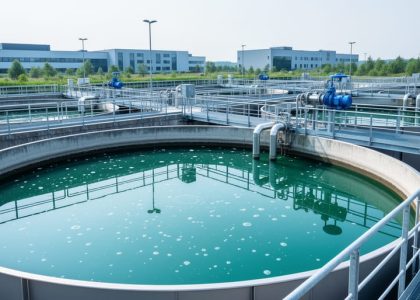
Landfills generate methane through anaerobic decomposition of organic materials, making them significant municipal and industrial emission sources. Even sites with gas collection systems experience fugitive emissions through soil cover and collection infrastructure gaps. Wastewater treatment facilities produce methane in anaerobic digestion processes and lagoon systems. Composting operations and organic waste management facilities contribute smaller but measurable methane loads depending on feedstock composition and process controls.
Industrial Process Emissions
Chemical production, petroleum refining, and primary metal manufacturing release methane through process vents, storage tanks, and wastewater handling. These point sources often prove easier to quantify and control than diffuse fugitive emissions common in other sectors.
Methane traps 80 to 84 times more heat than carbon dioxide over a 20-year period, making it the second-largest contributor to climate warming after CO2. This methane outsized short-term impact creates both a crisis and an opportunity: while methane persists in the atmosphere for only about a decade compared to centuries for CO2, aggressive reduction delivers measurable climate benefits within years rather than generations.
Industrial facilities that cut methane emissions simultaneously advance multiple environmental goals. Reducing fugitive methane improves local air quality by eliminating releases often accompanied by volatile organic compounds and hazardous air pollutants. The co-benefits extend beyond climate, supporting comprehensive air quality tactics that address worker safety, community health, and ecosystem protection.
From a climate strategy perspective, methane reduction represents the fastest lever available. The International Energy Agency estimates that available technologies could cut methane emissions from oil and gas operations by 75 percent, delivering near-term temperature reductions that buy crucial time while longer-term CO2 mitigation efforts scale. Energy managers increasingly recognize that methane programs aren’t peripheral to climate action, they’re the most cost-effective path to demonstrated progress within current budget cycles and corporate climate commitments.
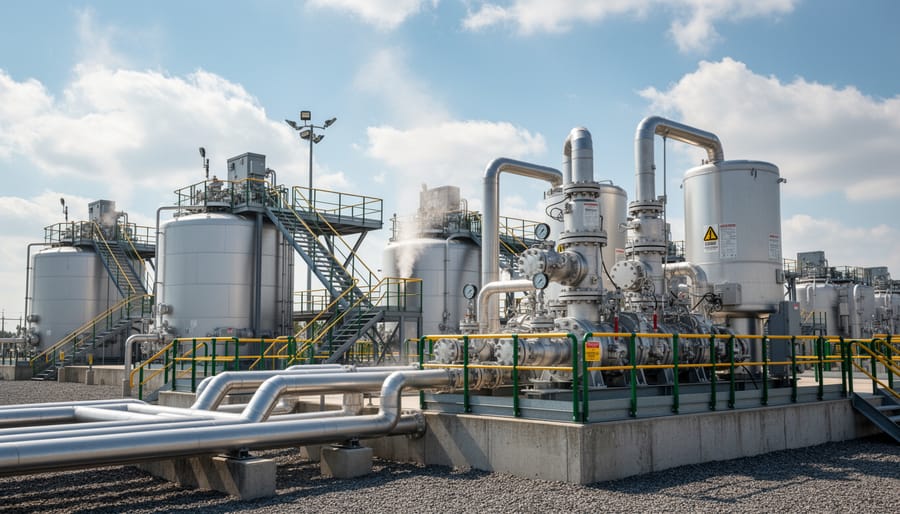
Establishing an accurate emissions baseline is the foundation of any credible methane reduction program. Before implementing mitigation measures, operators must understand where methane is escaping, at what rates, and from which equipment or process points. This quantification phase typically combines multiple detection technologies, each suited to different facility types and emission profiles.
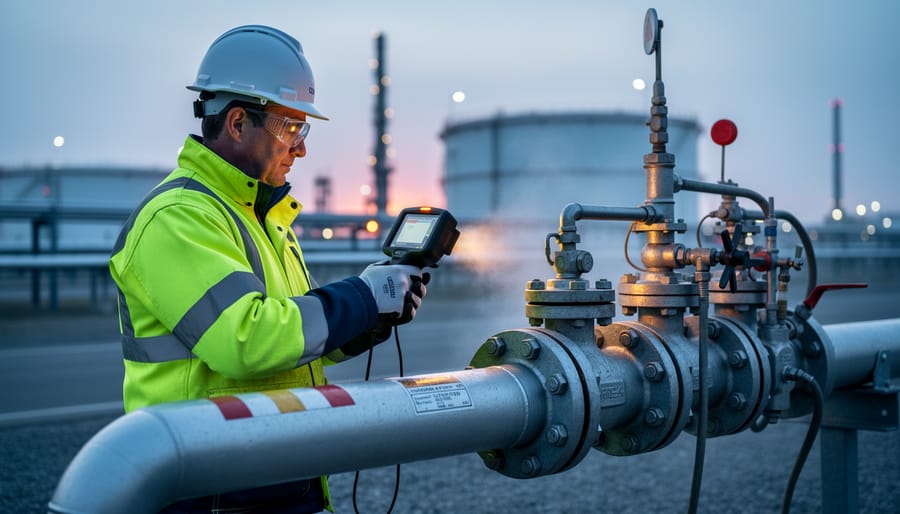
Optical gas imaging cameras remain the workhorse for initial assessments and periodic surveys. These specialized infrared devices visualize methane plumes invisible to the naked eye, allowing technicians to pinpoint leaking valves, flanges, compressors, and storage tanks during systematic facility walkthroughs. While effective for identifying emission points, optical imaging provides qualitative rather than quantitative data, you see the leak, but estimating its magnitude requires additional measurement.
For facilities with chronic leak sources or high consequence emission points, continuous leak detection quantification systems offer real-time surveillance. These networks of fixed sensors or fence-line monitors detect concentration changes as they occur, triggering alerts when emissions exceed preset thresholds. The technology has matured significantly, with deployment costs declining as regulatory pressure and voluntary commitments drive adoption across oil and gas operations.
Periodic survey programs, typically quarterly or semi-annual depending on regulatory requirements, complement continuous systems by covering equipment that changes seasonally or during maintenance cycles. The baseline assessment synthesizes data from all three approaches: optical surveys to map leak locations, quantification measurements to establish emission rates, and continuous monitoring to capture temporal variability and detect new leaks between surveys.
Once methane sources are identified, organizations have multiple technological and operational tools to reduce emissions. The choice of mitigation approach depends on emission volume, facility configuration, and economic feasibility.
Vapor recovery units (VRUs) capture methane that would otherwise be vented during storage tank operations, compression activities, or processing steps. These systems route captured gas back into production streams or fuel systems, turning a waste product into recoverable energy. In oil and gas operations, VRUs often pay for themselves through recovered product sales within two to three years.
Flare systems combust methane when recovery isn’t practical, converting it to CO2, which has roughly 28 times lower global warming potential over a 20-year period. Modern enclosed flares achieve 98-99% destruction efficiency when properly operated and maintained. However, flaring should be viewed as a transitional measure rather than an endpoint, as it still generates emissions and wastes energy value.
Equipment upgrades target fugitive emission sources directly. Replacing pneumatic devices powered by natural gas with compressed air or electric alternatives eliminates continuous bleed emissions. Upgrading valve packing, installing low-emission seal systems on compressors, and retrofitting storage tanks with internal floating roofs all reduce leak rates substantially.
Operational practice changes complement hardware investments. Implementing green completions during well drilling, optimizing blowdown procedures, and scheduling maintenance during planned shutdowns minimize unnecessary releases. Route-based leak surveys combined with immediate repair protocols create a continuous improvement cycle that sustains emission reductions over time.
Once a methane reduction program is operational, continuous monitoring and robust verification protocols ensure that emission reductions are real, sustained, and credible. Without systematic measurement, even well-designed mitigation efforts become invisible to regulators, investors, and internal stakeholders.
Effective monitoring combines automated sensors with periodic manual surveys. Continuous emission monitoring systems (CEMS) installed at major sources provide real-time data streams, detecting anomalies immediately and enabling rapid response. These systems typically feed into centralized data management platforms that aggregate readings, flag exceedances, and generate compliance reports. For distributed sources like wellhead equipment, quarterly or semi-annual surveys using optical gas imaging cameras identify new leaks that develop between scheduled maintenance.
Third-party verification adds credibility that internal monitoring alone cannot provide. Independent auditors review measurement methodologies, calibration records, and data integrity, confirming that reported reductions meet recognized protocols such as MRV (Measurement, Reporting, Verification) standards. Many voluntary carbon credit programs and regulatory frameworks require this external validation before accepting claimed reductions.
Data management platforms serve as the operational backbone, storing historical emissions data, tracking mitigation actions against specific sources, and calculating reduction progress against baseline inventories. The most effective systems integrate with work order management, linking detected emissions to repair tickets and closure verification. This closed-loop approach transforms monitoring from a compliance exercise into a tool for continuous improvement, demonstrating measurable progress in emission reduction tactics over time.
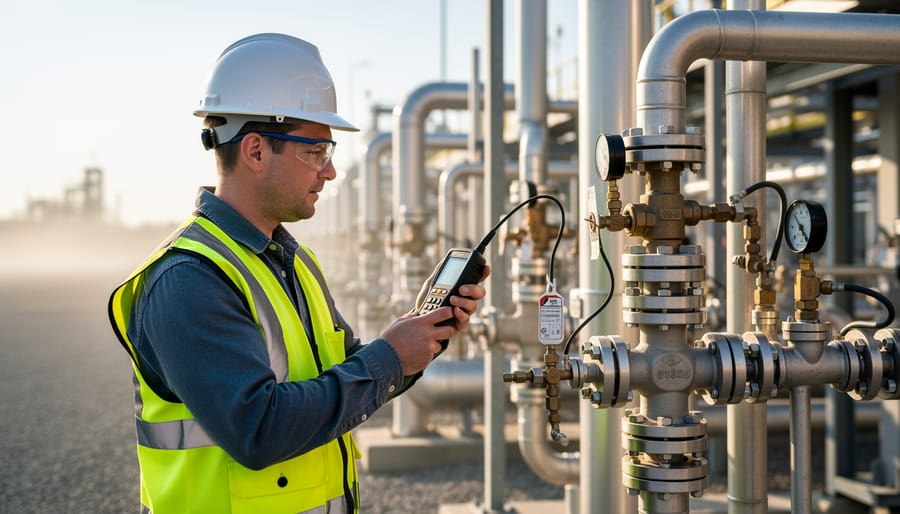
The regulatory environment for methane emissions has evolved dramatically over the past five years, creating a complex landscape that varies significantly by jurisdiction and industry sector. Understanding these requirements is essential for designing a compliance framework that meets current obligations while anticipating future standards.
At the international level, the Global Methane Pledge launched at COP26 has driven coordinated action among signatory nations to reduce methane emissions by 30 percent from 2020 levels by 2030. This commitment has cascaded into national regulations across more than 130 countries, though implementation mechanisms vary widely. The agreement primarily targets energy and waste sectors but increasingly extends to agriculture in certain jurisdictions.
In the United States, the EPA’s methane rule finalized in 2023 and strengthened in 2024 establishes comprehensive monitoring and reporting requirements for oil and gas operations. The regulation mandates quarterly leak detection and repair surveys for well sites and compressor stations, sets zero-flaring targets for new facilities, and phases out routine venting from pneumatic controllers. State-level regulations in places like Colorado, California, and New Mexico often impose stricter requirements than federal standards, including shorter detection cycles and lower emission thresholds for remediation.
| Jurisdiction | Key Requirements | Compliance Timeline |
|---|---|---|
| U.S. EPA Methane Rule | Quarterly LDAR surveys, pneumatic controller phase-out, super-emitter response | Phased: 2024-2027 |
| EU Methane Regulation | OGMP 2.0 reporting, import standards, measurement-based inventories | Full implementation 2027 |
| Canada CCME Framework | 75% methane reduction by 2030, quarterly monitoring, flare elimination | Progressive to 2030 |
| Alberta AER Directive 060 | Monthly surveys for larger facilities, vent reduction, fugitive management | Ongoing, amended 2025 |
The European Union’s methane regulation, which entered into force in 2024, takes a supply-chain approach by establishing import standards for natural gas and requiring measurement-based emission inventories rather than relying solely on engineering estimates. This regulation applies the Oil and Gas Methane Partnership 2.0 reporting framework, creating alignment with international best practices and affecting global suppliers to European markets.
Beyond mandatory regulations, voluntary frameworks such as the Oil and Gas Climate Initiative’s methane intensity targets and certification schemes like MiQ and Project Canary are shaping program design. These voluntary commitments often exceed regulatory minimums and create market differentiation opportunities, particularly for producers seeking premium pricing for responsibly sourced natural gas. Companies participating in these programs typically adopt continuous monitoring technologies and third-party verification to demonstrate performance levels that surpass what regulations alone would require.
Successful methane reduction programs require committed leadership and coordinated resources across multiple departments. Start by framing the business case for executives in terms they prioritize: regulatory risk mitigation, operational efficiency gains, and enhanced ESG positioning. Present baseline emission data alongside projected compliance costs, potential fines for non-compliance, and captured methane value to demonstrate tangible ROI rather than purely environmental benefits.
Assemble a core team spanning operations, environmental health and safety, engineering, procurement, and finance. Operations staff understand emission sources and production constraints; EHS professionals navigate regulatory requirements; engineers evaluate technology options; and finance teams track costs and returns. Designate a program champion with decision-making authority to drive accountability and maintain momentum when competing priorities emerge.
Budget for initial assessment technologies, ongoing monitoring equipment, mitigation infrastructure, and staff training. Many organizations underestimate verification and reporting systems. Allocate 15-20% of the total budget for program management and documentation to ensure measurement rigor and regulatory defensibility. Consider phased implementation to spread capital expenditure while demonstrating early wins that justify continued investment.
Selecting the right methane monitoring and mitigation technologies requires matching your specific emission profiles to available solutions. Start by categorizing your facility’s emission sources: are they primarily from pneumatic devices, compressor seals, storage tanks, or fugitive leaks? Each source type demands different detection and control approaches.
For monitoring, optical gas imaging cameras work well for large facilities with numerous potential leak points, allowing technicians to visualize methane plumes during routine surveys. Continuous monitoring systems using fixed sensors provide real-time data for critical equipment but require higher upfront investment. Smaller operations often achieve cost-effective results with handheld detection devices deployed during scheduled inspections.
Mitigation technology selection depends on emission volume and characteristics. High-volume venting from dehydrators or storage tanks typically justifies vapor recovery units that capture and route methane back into process streams. Lower-volume sources may require instrument air systems to replace gas-driven pneumatics or upgraded compressor seals. Consider integration with existing infrastructure and sustainable design principles when planning facility modifications.
Deployment should follow a phased approach: address highest-volume sources first to maximize near-term reductions, then systematically expand coverage. Factor in operational constraints including power availability, hazardous area classifications, maintenance access, and extreme weather conditions that affect equipment performance. Pilot testing new technologies on representative equipment reduces deployment risks before full-scale rollout across your operations.
Meaningful methane reduction programs require quantifiable metrics tracked consistently and communicated transparently. Select key performance indicators that reflect both absolute progress and efficiency gains: total methane emissions in metric tons CO2 equivalent, emission intensity ratios (methane per unit of production or throughput), leak detection response time, and percentage of identified leaks repaired within target timeframes.
Establish a reporting cadence that balances operational agility with stakeholder expectations. Monthly internal dashboards enable rapid course correction, while quarterly reports to executive leadership and annual public disclosures align with broader sustainability commitments. Track leading indicators like inspection frequency and equipment upgrade completion alongside lagging indicators like measured emission reductions.
Integration with existing ESG frameworks maximizes program value. Map methane metrics to relevant GRI, SASB, or TCFD disclosure requirements. Feed data directly into corporate sustainability reports and CDP climate questionnaires. Link methane reduction targets to executive compensation structures where possible to reinforce accountability.
Implement data management systems that aggregate information from continuous monitors, periodic surveys, and maintenance records into a single source of truth. This centralized approach prevents reporting inconsistencies and enables deeper analysis of emission patterns, technology effectiveness, and progress toward reduction goals across facilities and regions.
– In-context learning: ~3,500 tokens
– Instructions/Background: ~2,500 tokens
– Section content generation: ~600 tokens
– Total estimated: ~6,600 tokens
—
In 2022, Crescent Energy Partners, a mid-sized operator managing 285 producing wells across Wyoming’s Powder River Basin, launched a comprehensive methane reduction program after baseline measurements revealed emissions of approximately 12,400 metric tons CO2-equivalent annually. The company’s facilities included conventional production wells, gathering lines, and three central processing facilities, creating a complex emissions profile typical of upstream operations.
The baseline assessment, conducted using optical gas imaging cameras and continuous monitoring sensors at key facilities, identified four primary emission sources: pneumatic controllers (38% of total emissions), storage tank venting (27%), fugitive leaks from aging equipment (23%), and flaring operations (12%). This granular data informed a phased mitigation approach prioritized by both emission volume and cost-effectiveness.
In year one, Crescent replaced 142 high-bleed pneumatic controllers with low-bleed and zero-emission alternatives, installed vapor recovery units on five high-volume storage tanks, and implemented a quarterly leak detection and repair program using trained technicians with handheld infrared cameras. The combined capital investment totaled $1.8 million.
The second phase addressed fugitive emissions through a systematic equipment replacement schedule. The company upgraded 76 aging pneumatic pumps, replaced deteriorating valve packing, and retrofitted compressor seals at processing facilities. This phase required $950,000 in capital expenditure but targeted emission sources that traditional monitoring often missed.
The company faced significant challenges during implementation. Winter weather in Wyoming limited outdoor repair work to seven-month windows, extending the timeline by 40%. Supply chain delays for specialized low-emission controllers pushed some installations into year three. Internal resistance from field operators unfamiliar with new equipment required additional training sessions and revised maintenance protocols.
By the end of year three, verified measurements showed total methane emissions had declined to 3,850 metric tons CO2-equivalent annually, representing a 69% reduction from baseline. The program captured approximately 890 thousand cubic feet of natural gas daily that would otherwise have vented, generating $485,000 in annual recovered product value. When combined with avoided regulatory penalties under EPA regulations that took effect in 2024, the program achieved payback in 4.2 years while positioning Crescent as a regional leader in emissions performance.
Methane emission reduction programs deliver measurable financial returns that extend well beyond environmental compliance. While initial capital investments in monitoring equipment and mitigation technologies can range from $50,000 to several million depending on facility complexity, most industrial operators realize positive ROI within two to four years through multiple value streams.
Captured Product Value
The most direct financial benefit comes from recovered methane that would otherwise escape to the atmosphere. For upstream oil and gas operators, vapor recovery units and improved sealing systems convert fugitive emissions into saleable natural gas. A mid-sized production facility reducing methane losses by 1,000 metric tons annually captures approximately 1.4 million cubic feet of natural gas. At 2026 commercial rates, this translates to $40,000-60,000 in reclaimed product value per year, revenue that immediately offsets program operating costs.
Multiple Financial Benefits
Organizations implementing comprehensive methane reduction programs typically realize value across several dimensions:
Strategic Value and Market Positioning
Beyond direct financial metrics, methane reduction programs create real ESH value through improved stakeholder relationships and competitive positioning. Energy companies with verified methane reduction credentials attract institutional investors applying climate screens to portfolios, access supply agreements with corporate buyers demanding low-emission products, and strengthen their social license to operate in communities concerned about air quality. When calculating ROI, forward-thinking organizations include these strategic benefits alongside quantifiable cost savings and revenue gains.
Costs vary widely based on facility size, emission sources, and chosen technologies, ranging from $50,000 for basic monitoring at small sites to several million for comprehensive programs at large facilities. Most programs achieve positive ROI within two to four years through captured methane value, avoided compliance penalties, and operational efficiency gains.
Optical gas imaging cameras typically detect leaks above 1-3 grams per hour, while continuous monitoring systems can identify emissions as small as 0.01 kg/hr. For regulatory compliance and credible reporting, third-party verification using quantification methods accurate to within ±15-25% is standard practice.
Yes, methane programs complement existing air quality initiatives and often share infrastructure like monitoring networks, data management platforms, and reporting systems. Many facilities achieve cost savings by coordinating methane detection surveys with routine VOC inspections and integrating vapor recovery systems that address multiple emission streams.
Oil and gas operations currently face the most stringent requirements globally, including the EPA’s revised standards and emerging regulations in Canada, the EU, and other jurisdictions. Coal mining, landfills, and large livestock operations also encounter increasing regulatory scrutiny, though specific requirements vary significantly by region and facility type.
Beyond these core questions, energy managers often ask about program timelines. Expect three to six months for baseline assessment and technology selection, followed by phased implementation over one to two years depending on facility complexity and capital availability. Starting with high-emission sources delivers faster results and builds internal momentum.
Another common concern centers on staff expertise. While optical gas imaging requires trained technicians, many monitoring systems feature automated alerts and user-friendly dashboards that existing operations teams can manage with brief training. Consider partnering with technology vendors or consultants during the first year to transfer knowledge while your team builds capability.
For organizations juggling multiple sustainability priorities, methane reduction offers an efficient climate impact. Because methane’s warming effect dissipates within roughly 12 years compared to centuries for CO2, reductions deliver measurable atmospheric benefits faster than almost any other emission control strategy. This makes methane programs particularly valuable when stakeholders demand near-term climate action alongside long-term carbon neutrality commitments.
Methane emission reduction programs represent a critical intersection where regulatory necessity, climate responsibility, and operational value converge. As the fastest-growing component of comprehensive air emission reduction tactics, these programs deliver measurable climate benefits within timeframes that matter, reducing atmospheric concentrations that drive near-term warming while supporting broader decarbonization goals.
The evidence is clear: organizations implementing structured methane reduction initiatives achieve compliance certainty, capture economic value through recovered product and avoided penalties, and position themselves favorably with investors and stakeholders increasingly focused on Scope 1 emissions performance. The programs detailed throughout this article demonstrate that effective methane management isn’t simply an environmental add-on but an integral element of operational excellence.
Looking ahead, detection technologies will become more sensitive and affordable, regulatory frameworks will tighten globally, and stakeholder expectations will intensify. Organizations that establish robust methane reduction programs now, building internal expertise, deploying proven technologies, and embedding continuous improvement practices, will navigate this evolving landscape with confidence rather than scrambling to catch up.
The question isn’t whether to implement a methane emission reduction program, but how quickly you can move from assessment to action.