

Reducing CO2 emissions requires three core tactical approaches: fuel switching and process optimization, energy efficiency improvements across operations, and deployment of carbon capture or offset mechanisms. Environmental and energy managers implementing these strategies typically achieve measurable reductions within 12 to 24 months, provided they establish baseline emissions inventories and integrate reduction targets into broader air quality management programs. The difference between theoretical commitments and actual results lies in execution, a principle that applies equally to emissions reductions and the broader pursuit of real value through ESH consultancy.
Global carbon reduction commitments have accelerated regulatory pressure on industrial facilities, commercial operations, and energy-intensive sectors. Organizations now face compliance obligations under regional carbon pricing schemes, sector-specific emissions caps, and expanding disclosure requirements. Meeting these mandates demands systematic approaches to identifying emission sources, quantifying reduction potential, and validating outcomes through verified measurement protocols.
The challenge for most environmental professionals is not recognizing the need for CO2 reductions but selecting which tactics deliver the greatest impact given capital constraints, operational realities, and existing infrastructure. A chemical manufacturer may prioritize boiler conversions and waste heat recovery, while a logistics operator focuses on fleet electrification and route optimization. Context determines strategy, but the underlying framework remains consistent: measure accurately, target high-impact sources, implement proven technologies, and verify performance through continuous monitoring.

The financial argument for CO2 emission reductions has shifted from a purely compliance-driven exercise to a multi-dimensional business imperative. Energy managers and environmental professionals now face pressure from multiple stakeholders who view carbon performance as a fundamental indicator of operational excellence and long-term viability.
Carbon pricing mechanisms represent the most direct financial driver. As of 2026, over 60 jurisdictions have implemented carbon pricing systems through taxes or cap-and-trade programs, creating real costs for emissions that directly impact operational budgets. European facilities face carbon prices above €80 per tonne, while North American systems continue expanding coverage and increasing price floors. Even in regions without mandatory carbon pricing, internal shadow pricing has become standard practice for capital investment decisions, with leading corporations applying rates between $50 and $100 per tonne to evaluate project economics.
Beyond direct carbon costs, several converging business drivers demand attention:
The reputational dimension carries quantifiable value. Companies with strong carbon performance attract and retain talent more effectively, particularly in competitive labour markets where environmental values influence job decisions. Customer preferences increasingly favour demonstrably lower-carbon products, creating market share opportunities for early movers. Conversely, poor carbon performance triggers exclusion from major procurement processes and investor portfolios employing ESG screens.
Financial institutions now integrate carbon performance into credit assessments and loan terms. Sustainability-linked financing mechanisms offer interest rate reductions tied to emission reduction achievements, while green bonds provide access to lower-cost capital for qualifying projects. The cost of capital advantage for strong carbon performers typically ranges from 10 to 50 basis points, representing significant savings on large-scale financing.
Energy efficiency optimization represents the most cost-effective entry point for industrial CO2 reduction programs, often delivering payback periods under three years while establishing the foundation for more advanced interventions. The tactical approach centers on three interconnected domains: equipment performance, process configuration, and operational discipline.
Equipment upgrades target the primary energy consumers in industrial facilities. Variable frequency drives on motors, pumps, and compressors match power consumption to actual demand rather than running at full capacity continuously, typically reducing electricity use by 20-35% for these systems. High-efficiency burners and boilers improve combustion efficiency from typical rates of 75-80% to 85-92%, directly cutting fuel consumption and associated CO2 emissions. Compressed air system optimization, addressing leaks, pressure settings, and distribution design, addresses what is often the most energy-intensive and wasteful utility in manufacturing environments.
The fastest CO2 reductions come from fixing what’s already broken or badly configured; most facilities can cut energy consumption 15% within six months just by addressing obvious inefficiencies.
Process optimization examines how energy flows through production sequences. Heat recovery systems capture waste thermal energy from exhaust streams, cooling processes, or equipment, redirecting it to preheat combustion air, process water, or building spaces. Insulation improvements on process equipment, piping, and ductwork prevent thermal losses that force heating and cooling systems to work harder. Scheduling adjustments that concentrate energy-intensive operations during off-peak hours or coordinate batch processes to share heating and cooling loads can reduce peak demand and overall consumption without capital investment.
Operational adjustments institutionalize efficiency through management systems. Real-time energy monitoring identifies anomalies and consumption patterns that indicate equipment degradation or process drift. Preventive maintenance protocols ensure motors, drives, and combustion equipment maintain design efficiency rather than degrading over time. Operator training programs embed energy awareness into daily decision-making, turning the workforce into active participants in emission reduction rather than passive observers.

Fuel switching offers one of the fastest, most cost-effective pathways to immediate CO2 reductions in industrial operations. Converting from coal or heavy fuel oil to natural gas can cut emissions by 40-60% per unit of energy produced, while maintaining existing process infrastructure with relatively minor modifications. The coal-to-gas emission changes demonstrate substantial lifecycle benefits, though facility managers must account for methane leakage in supply chains to preserve these gains. For operations where gas infrastructure exists, this transition typically pays back investment within 3-5 years through reduced fuel costs and carbon compliance expenses.
Beyond fossil fuel optimization, renewable energy procurement has matured into a practical option for industrial facilities. On-site solar installations, wind power purchase agreements, and renewable energy certificates allow companies to displace grid electricity derived from coal and gas. Manufacturing operations with consistent baseload demand benefit most from hybrid systems that pair renewables with backup natural gas generation, ensuring reliability while capturing 60-80% of the emission reduction potential. Battery storage and advanced controls now enable facilities to shift loads to periods of peak renewable generation, maximizing clean energy utilization without compromising production schedules.
The most sophisticated approach combines multiple fuel sources within a single facility, natural gas for process heat, solar for electrical loads, and biomass where agricultural or forestry waste is locally available. This diversification hedges against fuel price volatility and regulatory changes while delivering the deepest CO2 cuts. However, success requires detailed energy modeling to size systems appropriately, robust maintenance programs for diverse equipment, and staff training across multiple technologies.

Carbon capture and sequestration (CCS) technologies have transitioned from pilot-scale demonstrations to commercially viable options for industrial facilities that cannot achieve deep CO2 reductions through efficiency or fuel switching alone. For cement plants, steel mills, refineries, and chemical manufacturers facing hard-to-abate emissions, point-source capture systems now offer proven pathways to substantial emission cuts.
Post-combustion capture remains the most widely deployed approach, using amine-based solvents to separate CO2 from flue gas streams after fuel combustion. These systems can capture 85-95% of CO2 from existing smokestacks without requiring major process modifications, though they carry significant energy penalties of 15-30% and substantial capital costs. Pre-combustion capture, suitable for gasification facilities and hydrogen production, removes CO2 before combustion occurs, achieving higher capture rates with lower energy consumption in appropriate applications.
Carbon utilization presents alternatives to permanent geological storage. Industrial facilities are converting captured CO2 into products including construction materials, synthetic fuels, chemicals, and enhanced oil recovery injectants. While utilization volumes remain smaller than storage capacity needs, these pathways can improve project economics through revenue generation rather than pure disposal costs.
Successful CCS deployment requires careful assessment of capture technology fit, available storage infrastructure or utilization markets, regulatory frameworks for long-term liability, and total lifecycle costs including monitoring and verification. Energy managers should evaluate CCS as part of a comprehensive reduction strategy rather than a standalone solution, particularly for facilities with concentrated, high-volume emission sources where capture efficiency justifies the investment.
Process redesign and material substitution represent the most fundamental intervention points for CO2 reduction, addressing emissions at their source rather than managing consequences. Unlike end-of-pipe solutions, these approaches restructure how products are made and what goes into them.
Manufacturing process optimization begins with mapping carbon intensity across each production step. Companies identify high-emission operations, often heat-intensive processes like calcination, sintering, or distillation, and explore alternative methods that achieve identical outputs with lower energy requirements. Switching from batch to continuous processing, for instance, typically reduces energy consumption by 15-30% through improved thermal efficiency and reduced heating cycles. Cold-forming techniques replace energy-intensive hot processes in metalworking. Membrane separation technologies substitute for traditional distillation in chemical manufacturing, cutting energy demand by up to 90% in specific applications.
Material substitution targets the embedded carbon in raw inputs. Construction materials offer clear examples: replacing traditional Portland cement with supplementary cementitious materials like fly ash or ground granulated blast furnace slag reduces carbon footprint by 40-70% per ton of concrete produced. In manufacturing, bio-based feedstocks displace petroleum-derived chemicals, eliminating fossil carbon from the product lifecycle. Principles of sustainable design guide these decisions, ensuring substitutions deliver equivalent performance while reducing environmental impact.
Supply chain reconfiguration addresses logistics emissions through vendor selection, regional sourcing strategies, and transportation mode optimization. Shifting from air freight to ocean shipping reduces CO2 emissions per ton-mile by approximately 95%, though transit time considerations require careful planning.
Reliable CO2 reduction programs depend on quantification systems that withstand regulatory scrutiny and stakeholder review. Without consistent measurement protocols, organizations cannot establish meaningful baselines, track actual progress, or demonstrate compliance with carbon commitments.
Three primary frameworks dominate industrial CO2 accounting, each offering distinct advantages for specific operational contexts:
| Protocol | Scope Applicability | Primary Use Case | Reporting Requirements |
|---|---|---|---|
| GHG Protocol | Scopes 1, 2, and 3 | Corporate inventory and sustainability reporting | Annual disclosure, third-party verification optional |
| ISO 14064 | Organization and project levels | Certification and offset project validation | Independent verification required for certification |
| EPA Mandatory Reporting | Direct emissions above thresholds | U.S. regulatory compliance | Annual facility-level reporting with prescribed calculation methods |
Selecting the appropriate framework depends on regulatory jurisdiction, reporting objectives, and operational complexity. Facilities subject to multiple requirements often maintain parallel accounting systems, though well-designed programs can satisfy overlapping demands through a unified measurement infrastructure.
Baseline establishment requires historical data spanning at least three years to account for production variability and normalize for weather, throughput changes, and process adjustments. Energy managers should document baseline assumptions explicitly, including boundary definitions, calculation methodologies, and exclusions. This documentation becomes critical when demonstrating reduction progress to external auditors or regulatory agencies.
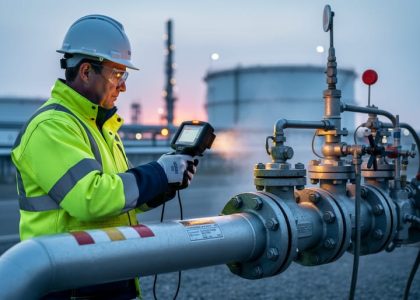
Continuous monitoring systems provide the most accurate emission data, particularly for large point sources where direct measurement of fuel consumption and stack concentrations enables real-time tracking. Smaller sources typically rely on periodic sampling combined with engineering calculations based on fuel analysis and equipment specifications. Similar rigorous approaches apply across emission categories, as seen in diesel emission compliance programs where systematic measurement underpins successful reduction claims.
Third-party verification adds credibility to reduction claims, especially when seeking carbon credits or responding to investor inquiries. Independent auditors examine calculation methodologies, review supporting documentation, and assess data quality controls. Organizations pursuing verification should maintain detailed records of emission factors, activity data sources, and quality assurance procedures throughout the measurement period rather than assembling documentation retroactively.

CO2 reduction strategies rarely operate in isolation. Most tactics that lower carbon emissions simultaneously affect other pollutants, creating opportunities for comprehensive air quality improvements when programs are designed strategically.
Energy efficiency measures deliver the clearest co-benefits. Combustion equipment upgrades that reduce fuel consumption decrease CO2 while proportionally cutting NOx, SOx, and particulate emissions. A boiler optimization project that achieves 20% fuel savings typically delivers corresponding reductions across all combustion-related pollutants. The key is recognizing these synergies during project evaluation rather than treating them as incidental benefits.
Fuel switching presents more complex dynamics. Natural gas conversion eliminates SOx and dramatically reduces particulate emissions compared to coal or heavy oil, but NOx control may require additional attention depending on burner technology and operating conditions. Advanced low-NOx burners can address this trade-off, but they require upfront specification rather than retrofitting later.
Renewable energy integration removes combustion sources entirely, eliminating multiple pollutant streams simultaneously. Solar and wind installations contribute zero direct emissions, making them powerful tools for facilities facing multiple air quality challenges. However, backup generation systems still need careful selection to avoid creating new pollution hotspots during grid interruptions.
Process modifications often yield unexpected air quality benefits beyond CO2. Solvent substitution programs that reduce VOC emissions frequently lower energy requirements for ventilation and thermal processing. Similarly, waste management techniques that minimize material losses reduce both production energy intensity and fugitive emissions.
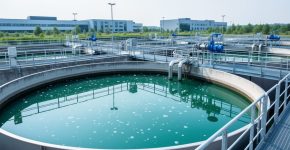
The monitoring infrastructure for CO2 tracking strengthens overall air quality management. Continuous emission monitoring systems installed for carbon reporting provide data streams applicable to other pollutants. Wastewater treatment systems that capture CO2 from biological processes often include air quality controls for hydrogen sulfide and other odorous compounds, demonstrating how integrated environmental management creates operational efficiencies.
Strategic integration requires evaluating each CO2 tactic through a multi-pollutant lens during planning, not after implementation. This approach maximizes regulatory compliance, reduces total abatement costs, and accelerates progress toward comprehensive environmental performance goals.
A mid-sized automotive components manufacturer operating three facilities across Europe faced mounting pressure from both regulatory requirements and customer sustainability mandates to reduce its carbon footprint. The company’s baseline emissions totaled 47,000 metric tons of CO2 annually, primarily from natural gas-fired process heating, compressed air systems, and grid electricity consumption. Rather than pursuing a single large-scale project, the facility leadership developed a phased three-year program addressing multiple emission sources simultaneously.
Phase one focused on energy efficiency improvements with immediate payback periods. The company replaced aging air compressors with variable-speed drive units, installed heat recovery systems on paint booth exhaust streams, and retrofitted 3,200 lighting fixtures with LED alternatives. These changes required €780,000 in capital investment but delivered 18% energy consumption reduction within nine months. The compressed air optimization alone eliminated 3,100 metric tons of CO2 annually while cutting electricity costs by €165,000 per year.
Phase two introduced fuel switching and renewable energy procurement. The facility converted two natural gas boilers to biomass systems using locally-sourced wood pellets, reducing direct fossil fuel consumption by 62% in those units. Simultaneously, the company negotiated a power purchase agreement for wind energy covering 40% of total electricity demand. This phase required €2.1 million investment and delivered an additional 15% CO2 reduction, though biomass boiler optimization proved more complex than anticipated, requiring six months of fine-tuning to achieve design efficiency.
Phase three addressed process redesign and remaining thermal loads. Engineers modified curing oven temperature profiles, reducing energy intensity per part by 11% without compromising quality specifications. The facility also installed a 200 kW rooftop solar array and implemented smart energy management systems that shifted non-critical loads to off-peak hours when grid carbon intensity was lower.
The program achieved 42% total CO2 reduction after 34 months, exceeding the original 40% target. Total investment reached €3.4 million with a blended payback period of 4.7 years. Critically, the company documented all methodology and results through third-party verification, enabling customer recognition and supporting future green financing applications. Operational staff initially resisted process changes but became program advocates after seeing measurable utility cost reductions translate to departmental budget relief.
Effective CO2 emission reduction isn’t a supplementary initiative, it’s fundamental to modern air emission management. The strategies detailed in this guide represent more than compliance measures; they’re investments in operational resilience, cost efficiency, and competitive positioning as regulatory frameworks tighten and stakeholder scrutiny intensifies.
The most successful programs share common characteristics: they start with rigorous measurement, prioritize tactics based on cost-effectiveness and operational fit, and integrate CO2 reduction with broader air quality objectives rather than treating it as a standalone effort. A pharmaceutical manufacturer and a cement producer will need vastly different approaches, but both require customized strategies grounded in their specific processes, constraints, and opportunities.
For energy managers and environmental professionals, the immediate priority is assessment. Where are your largest CO2 sources? Which reduction tactics align with planned capital investments or process modifications? What quick wins exist through operational optimization before major capital deployment? The case study presented demonstrates that meaningful reductions, 40% or more, are achievable when organizations commit to phased implementation and treat this as a continuous improvement process rather than a one-time project.
The emission reduction landscape will continue evolving. Technologies mature, regulations expand, and market expectations shift. Organizations that establish robust programs now, with clear baselines and systematic improvement frameworks, position themselves to adapt efficiently as requirements advance. Start by identifying your three highest-impact opportunities and developing implementation roadmaps for each.