


Implementing safety measures on a construction site comes down to a five-part approach: assess the hazards, plan the work around them, equip and control the site, train the people on it, and verify that every control works. Done properly, a single site can have its core program in place within a few weeks, though it takes sustained discipline to keep it effective. The main prerequisite is authority. Whoever leads the effort needs the mandate to stop work when conditions are unsafe, and that mandate has to come from the top.
This sequence works because it mirrors how incidents actually develop. Most serious events trace back to a hazard that was never identified, a plan that ignored it, a control that wasn’t in place, a worker who wasn’t prepared, or a check that never happened. Close each gap in order and you remove the common failure points rather than chasing individual risks.
This guide is written for ESH professionals, executives, and auditors who need structure and credibility, not a generic checklist. It covers the documentation and tools you’ll need, the conditions that should trigger an immediate stop-work, and the ordered steps for putting each control in place. It then shows how to verify that those controls hold up under scrutiny, with a case study and expert insight to ground the guidance in practice.
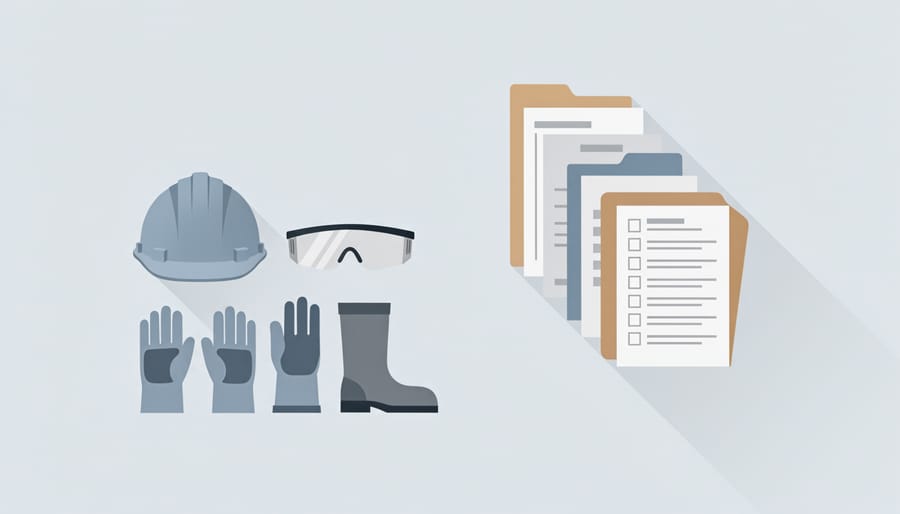
Before anyone picks up a tool, the site needs the right paperwork, equipment, and people in place. Skipping this groundwork is the most common reason safety programs stall once work begins. The exact requirements depend on your jurisdiction, the project type, and the scale of the work, so treat the checklist below as a baseline and confirm it against your national regulator’s rules. A tower crane lift on a high-rise carries different obligations than a low-rise refurbishment.
Start with documentation, then equipment, then people. The core resources typically include:
Collective protection deserves particular attention. Measures that protect everyone at once, such as edge protection or barriers, generally outperform measures that rely on each worker doing the right thing. PPE is the last line of defence, not the first, so budget for engineered controls before you stock the equipment store.
Equally important are the people. Name a competent person to lead the program, and make sure supervisors, subcontractor representatives, and workers have defined roles. Many sites also appoint a trained first aider and fire warden on every shift. Consultation with the workforce is not a courtesy; it surfaces hazards that office-based planners miss.
Finally, anchor your system to a recognised framework. ISO 45001 provides an internationally accepted structure for occupational health and safety management, and most countries layer their own construction-specific regulations on top. Check which codes apply to your project, and make sure everyone involved knows where to find them. Once these resources are in place, you are ready to look at the hazards that demand the strictest controls.
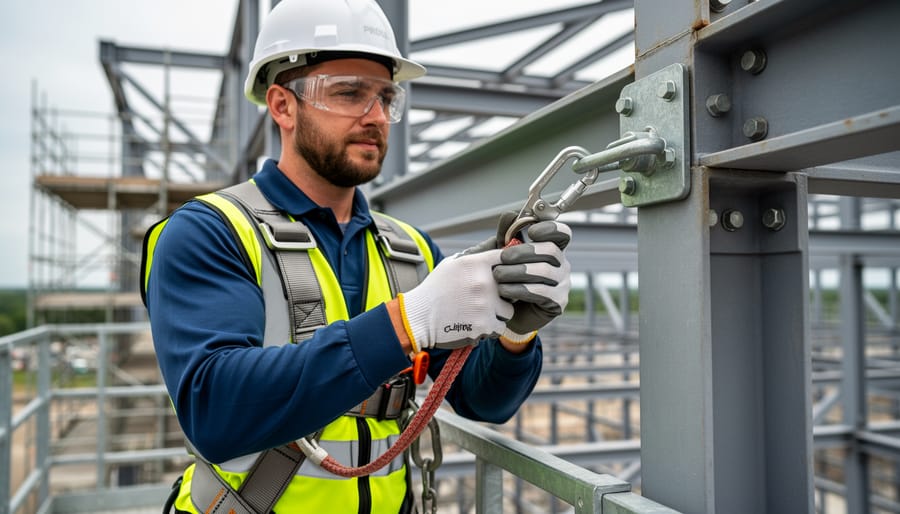
Construction work concentrates a small set of hazards that account for a disproportionate share of serious injuries and fatalities. Regulators and safety bodies commonly group them into five categories, and every site safety plan should address each one explicitly.
– Falls from height: Work near unprotected edges, openings, roofs, ladders, and scaffolds.
– Struck-by incidents: Contact with moving vehicles, swinging loads, falling objects, and ejected materials.
– Caught-in or between: Workers crushed or trapped by machinery, collapsing structures, or equipment in motion.
– Electrocution: Contact with overhead lines, buried services, damaged cables, or poorly isolated temporary power.
– Excavation collapse: Trench and excavation walls failing without adequate support, shoring, or safe access.
Because the exact ranking and rates differ by country and year, readers should consult their national regulator for current figures rather than relying on generalised numbers.
Knowing the hazards is only useful if the site agrees in advance on when work must stop. A stop-work condition exists whenever a task cannot continue without exposing someone to serious harm that has not been controlled. Common triggers are described in the callout below.
Equally important, stop-work authority must belong to every worker, not only supervisors or safety officers. The person closest to the task is often the first to see a changing condition, such as a failed guardrail or a shift in ground stability. Sites should state this authority in induction, reinforce it in toolbox talks, and make clear that stopping work in good faith will never lead to reprisal. Work should resume only after a competent person has reviewed the condition, corrected it, and confirmed the area is safe. Handled this way, a stoppage becomes a sign that the safety system is working rather than a project delay.
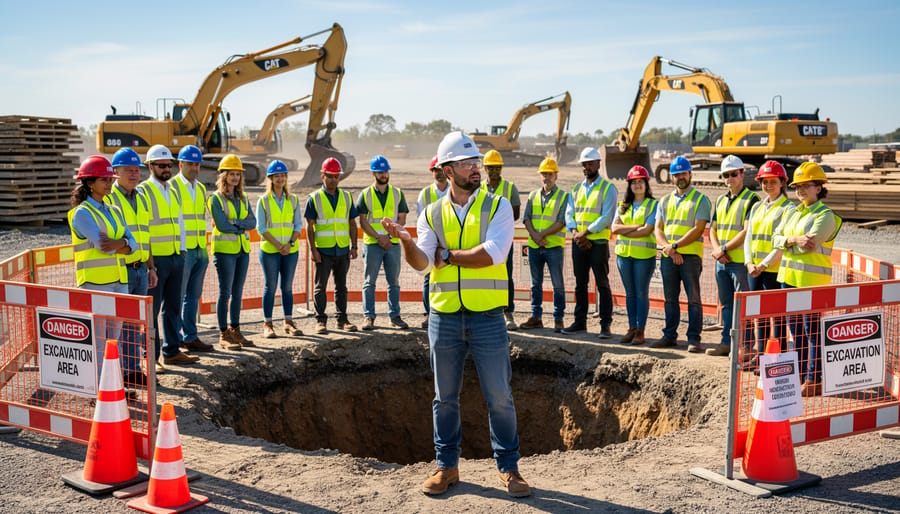
Start the risk assessment by walking the site with the people who will do the work, not by filling in a template at a desk. Break the project into tasks and phases, identify what could cause harm in each, and note who is exposed and for how long. Then rank each hazard by likelihood and severity so that limited time and budget go to the risks that could cause a serious or fatal injury first.
Once the risks are ranked, choose controls in order of effectiveness rather than convenience:
1. Eliminate the hazard entirely, such as prefabricating components off site so no one works at height to assemble them.
2. Substitute with something less hazardous, such as a wet-cutting method in place of dry cutting to reduce silica dust.
3. Engineer the hazard out of reach, using guardrails, trench shoring, or machine guarding.
4. Administer through procedures, permits to work, exclusion zones, and scheduling that keeps trades apart.
5. Protect with PPE, which is the last line of defence because it depends on correct use every time.
The same logic plays out differently by phase. During excavation, sloping or shoring the trench wall is a stronger control than telling workers to stay alert near the edge. In structural work, installing edge protection and designing connections to be made at ground level beats relying on harnesses alone. During finishing, choosing low-emission coatings and adding local exhaust ventilation controls fumes more reliably than respirators.
Record the assessment, assign an owner to every control, and revisit it whenever the scope, weather, or sequence of work changes.
Good site planning starts before the first excavator arrives. Begin by separating people from machines. Create dedicated pedestrian routes with physical barriers, set one-way traffic flow for vehicles where space allows, and position gates so deliveries never cross worker walkways. Banksmen and clear signage should control any unavoidable crossing points.
Laydown and storage areas deserve the same attention. Locate them close to where materials will be used to cut manual handling, keep them clear of overhead lines and excavation edges, and store flammable liquids and gas cylinders in ventilated, segregated, signed compartments. Embedding principles of sustainable design at this stage also reduces rework and surplus material that would otherwise clutter walkways.
Temporary electrical distribution should run through protected distribution boards with residual current devices. Keep cables off the ground, route them away from wet areas, and inspect them on a fixed schedule. Plan fire safety alongside this: extinguishers at hot-work and storage points, a hot-work permit process, and unobstructed access for emergency vehicles.
Emergency readiness depends on knowing exactly what happens when something goes wrong. Provide trained first aiders and stocked first aid stations, mark evacuation routes and assembly points clearly, and test the alarm and drill procedure with every new crew. Make sure routes stay usable as the site layout changes.
Several environmental controls double as safety measures. Dust suppression protects lungs and visibility, and spill containment prevents slips and ground contamination. Noise management protects hearing and keeps verbal warnings audible. Sound waste management techniques keep walkways clear and reduce fire loading, while practical air quality tactics address dust and emissions at source.
Training turns a written plan into daily practice. Start with a site induction before anyone works unescorted. Cover the site layout, emergency procedures and assembly points, the hazards specific to the current project phase, PPE requirements, and how to report an incident or stop work. Then add task-specific training for high-risk activities such as work at height, confined space entry, lifting operations, and excavation.
Toolbox talks keep that knowledge current. Short, focused sessions at the start of a shift work best when they address the day’s actual tasks and invite questions rather than reading a script. Record attendance and note any concerns raised, since those often point to hazards the formal assessment missed.
Subcontractors need verification, not assumption. Check certifications, review their method statements, and confirm competency before they start, then spot-check on the job.
Multinational workforces add a communication challenge. Use pictograms, translated materials, and interpreters or bilingual leads where needed, and confirm understanding by asking workers to explain or demonstrate a task rather than simply sign a form. Allow for varying literacy levels.
Supervisors set the real standard. When they wear PPE correctly, follow the permit system, and respond to reports without blame, workers do the same. Make reporting channels simple, visible, and protected from reprisal.
The following is an illustrative composite, not a documented project, but it reflects patterns ESH teams commonly report on mid-sized commercial builds.
Consider a six-storey office development where early inspections showed inconsistent edge protection and informal hot-work and lifting approvals. Management responded with three linked measures: a fall-protection plan covering guardrails, covers, and harness anchor points; a permit-to-work system for hot work, confined spaces, and crane lifts; and a short daily inspection by each trade supervisor before work began.
The change was less about new paperwork than about who owned it. The project director attended the weekly safety walk and personally closed out overdue corrective actions, which signalled that the program outranked schedule pressure. Subcontractor foremen helped draft the permit forms, so the questions matched real tasks rather than generic checklists. Workers were invited to flag a missing guardrail or an unclear permit without penalty, and those reports were answered within the same shift.
Over the following months, the team observed fewer near misses tied to unprotected edges and less rework caused by uncoordinated trades, because permits forced sequencing conversations that used to happen too late. Environmental controls were folded into the same routine. Plant operators were checked against diesel emissions compliance requirements during daily inspections, so engine idling and equipment condition were reviewed alongside guarding and access.
Two lessons stand out. First, leadership commitment must be visible and consistent, not delegated. Second, worker participation turns controls from imposed rules into working habits. Neither requires a large budget, only discipline and follow-through.
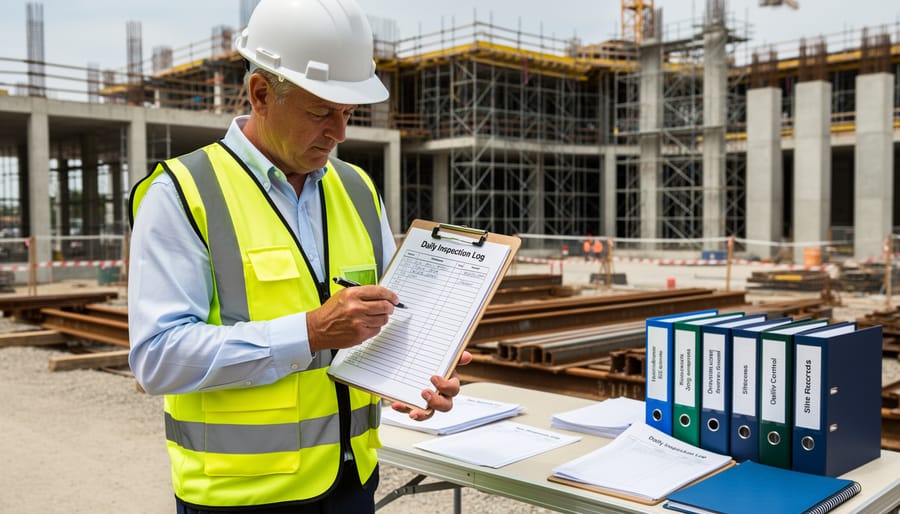
Confirming that your safety measures actually work means checking them against evidence, not assumptions. Start with routine inspections: daily walk-throughs by supervisors, weekly formal inspections, and a permit-to-work review at every shift handover. Then decide which indicators you will track, because the choice shapes what you can learn.
Lagging indicators, such as recordable incidents, tell you what has already gone wrong. They matter for regulators and boards, but they arrive too late to prevent harm. Leading indicators show whether the system is healthy before anyone is hurt: near-miss reporting rates, how quickly corrective actions are closed, and training completion against plan. A rising near-miss count is often a good sign, since it suggests workers trust the reporting channel.
Use a simple checklist to keep the routine honest:
Internal audits test whether the written system matches what happens on the ground, and management review closes the loop by deciding what resources and changes are needed. Under frameworks such as ISO 45001, this cycle of plan, do, check, and act is how the program keeps improving.
The same data has value beyond the site fence. Inspection results, training records, and incident trends can feed broader ESH and sustainability reporting, giving executives one consistent view of performance. If your team lacks capacity to build that reporting or audit the program independently, ESH consultancy can help turn strategy into working operations.
For next steps, standardise your templates, pilot the verification routine on one project, and refine it before rolling it out across your portfolio.
Readers often ask the same practical questions when they start building a site safety program. These answers stay general because legal duties and inspection rules vary by jurisdiction.
Responsibility is usually shared. Clients, principal contractors, subcontractors, designers, and individual workers each carry duties under national law, with the party controlling the work typically holding the greatest burden. Check your local regulator’s guidance to confirm how duties are allocated on your project.
Many sites run a daily walk-around by supervisors, supplemented by scheduled formal inspections and checks before high-risk work begins. Some equipment, such as scaffolds and lifting gear, has statutory inspection intervals set by local rules, so confirm what applies to you.
A risk assessment identifies hazards and decides which controls are needed. A method statement then describes, step by step, how the task will be carried out safely using those controls, and who is responsible for each part.
Set common site rules at the pre-qualification stage and enforce them through a single induction. Require each subcontractor to submit their own risk assessments, then coordinate overlapping work through regular planning meetings and clear lines of supervision.
A related question is how ISO 45001 fits alongside local regulation. Treat the law as the minimum requirement and the standard as a management framework that helps you meet it consistently, document it, and improve over time. Certification does not replace legal compliance, and regulators will still judge you against the applicable statutes.
Effective construction site safety is not a document you file once and forget. It is a cycle that repeats for as long as the project runs: assess the hazards, apply controls in order of effectiveness, train and supervise the people doing the work, then verify that what you planned is what is actually happening on site. When one link weakens, the whole system drifts. A thorough risk assessment means little if training never reaches subcontractors, and strong training cannot compensate for controls that no one inspects.
What separates reliable programs from fragile ones is discipline. Leaders who commit time and resources, supervisors who model safe behavior, and workers who feel free to stop a job they believe is unsafe all keep the cycle moving. Leading indicators such as near-miss reports, corrective action closure, and inspection quality tell you where to adjust before an injury forces the question.
If you are building a program from scratch, or testing one that has grown informally over several projects, an independent view can speed things up. ESH specialists can audit current site practices against recognized frameworks, identify gaps in controls and documentation, and help you design a program that fits your project types, workforce, and regulatory setting. Start with an honest look at where your cycle is strongest and where it breaks down, and bring in expert support to close those gaps.