


Strategic consulting delivers measurable value only when it connects high-level vision to executable operational improvements. For organizations in environment, safety, and health (ESH), this integration determines whether sustainability commitments translate into reduced incidents, regulatory compliance, and resource efficiency—or remain aspirational statements in annual reports.
Consultants bridge the strategy-operations gap by deploying three critical capabilities. First, they conduct diagnostic assessments that quantify performance gaps against industry benchmarks, identifying where operational processes fail to support strategic ESH objectives. A manufacturing client reducing carbon emissions by 40% required not just new targets, but redesigned maintenance protocols, supplier qualification criteria, and energy monitoring systems that consultants embedded into daily workflows.
Second, effective consulting transforms strategic frameworks into operational playbooks. This means converting broad safety culture goals into specific behavioral indicators, training modules, and accountability structures that frontline supervisors can implement. The distinction between theoretical recommendations and operational reality lies in this translation work—developing standard operating procedures, dashboards, and decision-making tools that make strategy executable at every organizational level.
Third, consultants establish measurement systems that connect operational activities to strategic outcomes. They design key performance indicators linking individual process improvements to enterprise-level ESH metrics, enabling leadership to track return on investment and course-correct based on evidence rather than assumptions.
This strategy-operations integration requires consultants who understand both boardroom priorities and shop-floor realities. The following frameworks and case examples demonstrate how leading consulting approaches deliver tangible operational results while advancing strategic ESH objectives, providing professionals with proven methodologies to evaluate consulting partnerships and implementation approaches that generate documented performance improvements rather than merely comprehensive reports.
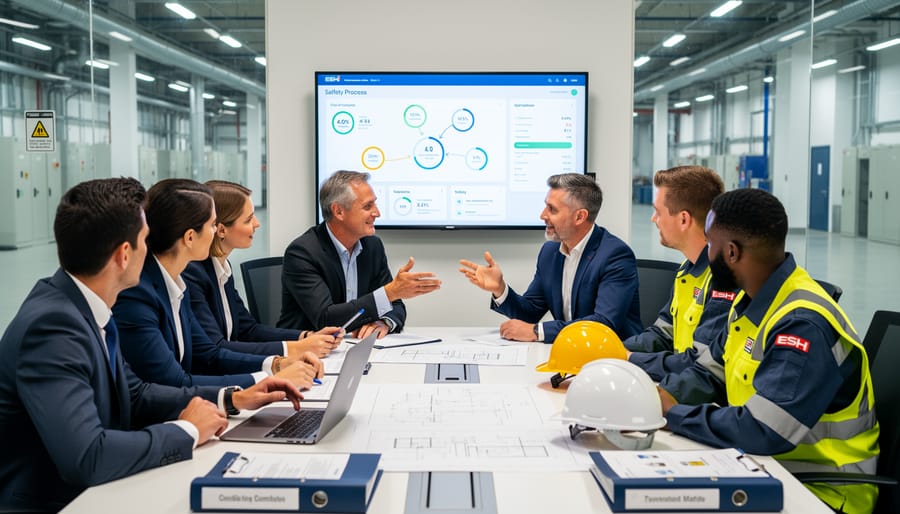
Strategic sustainability plans frequently falter at the execution stage due to fundamental operational disconnects. Research indicates that approximately 67% of well-formulated environmental strategies fail to achieve their intended outcomes, primarily because organizations lack the operational infrastructure to translate ambitious commitments into daily activities.
Resource misallocation represents the most common failure point. Companies often invest heavily in sustainability reporting systems while underfunding the operational teams responsible for data collection and process improvements. A multinational manufacturing firm discovered this gap when their carbon neutrality pledge required $15 million in operational changes, yet only $3 million had been allocated beyond the initial strategic assessment. Without proper resource mapping during the planning phase, sustainability initiatives compete unsuccessfully against core business priorities for funding and personnel.
Compliance gaps emerge when strategies overlook jurisdictional complexities and regulatory timelines. Organizations pursuing global sustainability frameworks sometimes design one-size-fits-all approaches that fail to address specific regional requirements. For instance, a chemical company’s water stewardship strategy met international standards but violated local discharge regulations in three operating regions, resulting in $2.7 million in penalties and reputational damage.
Performance monitoring failures compound these challenges. Strategies lacking defined operational key performance indicators cannot identify deviations early enough for corrective action. When metrics remain abstract rather than tied to specific operational processes, accountability dissolves across organizational layers. Expert analysis shows that companies integrating operational checkpoints into their strategic frameworks achieve 3.2 times higher implementation success rates than those relying solely on annual performance reviews.
The most valuable contribution experienced ESH consultants provide is their ability to bridge the gap between strategic vision and day-to-day operations. This translation function transforms abstract goals like “improve safety culture” or “achieve carbon neutrality by 2030” into concrete action plans with clearly defined milestones, responsibilities, and performance indicators.
Effective operational translation begins with breaking down strategic objectives into specific, measurable components. For example, a commitment to reduce workplace incidents by 25% becomes a series of operational initiatives: implementing behavior-based safety observations, upgrading personal protective equipment standards, enhancing supervisor training programs, and establishing leading indicator tracking systems. Each component receives assigned ownership, resource allocation, and timeline specifications.
The consultant’s expertise proves particularly valuable in establishing appropriate metrics and accountability structures. Rather than relying solely on lagging indicators like injury rates or compliance violations, seasoned consultants design balanced scorecards incorporating leading indicators such as near-miss reporting frequency, safety training completion rates, and proactive hazard identification trends. These metrics provide early warning signals and enable course correction before problems escalate.
Consider a manufacturing organization that engaged consultants to operationalize their environmental sustainability strategy. The consulting team developed a phased implementation roadmap that included energy audits across facilities, supplier engagement protocols, waste stream analysis, and employee engagement campaigns. Critically, they established quarterly review checkpoints with executive sponsors and operational managers to assess progress, address barriers, and adjust tactics based on emerging data. This structured approach ensured strategic commitments translated into measurable operational improvements rather than remaining aspirational statements in annual reports.
Effective ESH consulting begins with a thorough diagnostic assessment that maps the current operational landscape and identifies strategic improvement opportunities. This foundational phase involves conducting comprehensive audits across environmental compliance, safety protocols, health management systems, and sustainability initiatives to establish a clear baseline for strategic planning.
The diagnostic process typically encompasses document reviews, site inspections, stakeholder interviews, and data analysis to evaluate existing programs against regulatory requirements and industry benchmarks. Consultants examine incident reports, permit compliance records, training effectiveness, resource consumption patterns, and management system documentation to identify gaps and opportunities. This evidence-based approach ensures that strategic recommendations are grounded in operational reality rather than theoretical frameworks.
Establishing measurable baselines is critical for demonstrating future progress and return on investment. Key performance indicators might include injury frequency rates, environmental incident counts, energy consumption per unit of production, waste diversion percentages, and compliance audit scores. For example, a multinational manufacturing client reduced recordable incidents by 47% within eighteen months after consultants established baseline metrics and identified systemic procedural gaps during the diagnostic phase.
The assessment deliverable typically includes a comprehensive gap analysis, risk prioritization matrix, and opportunity roadmap that connects current state findings to strategic objectives. This baseline documentation becomes the reference point for measuring operational improvements, validating strategic decisions, and communicating progress to stakeholders. By quantifying current performance objectively, organizations can set realistic targets and allocate resources effectively to achieve meaningful ESH transformation.
Effective sustainability and environmental strategy requires careful calibration between organizational vision and ground-level execution capacity. Consultants begin this alignment process through comprehensive operational assessments that evaluate current resources, technological infrastructure, and workforce capabilities against proposed strategic objectives.
Resource assessment forms the foundation of this alignment. This involves auditing existing environmental management systems, personnel qualifications, budgetary allocations, and physical assets. For instance, a manufacturing company aiming to achieve carbon neutrality must first understand its current energy infrastructure, available capital for renewable technology investments, and operational constraints that might limit rapid transitions. Consultants identify gaps between aspirational targets and present-day capabilities, creating realistic implementation roadmaps that bridge these divides.
Technology evaluation represents another critical dimension. Many environmental, health, and safety initiatives depend on digital monitoring systems, emissions tracking software, or automated compliance tools. Consultants assess whether organizations possess the technological maturity to support proposed strategies. A recent case involving a chemical processing facility demonstrated this principle: consultants recommended phased technology adoption after determining that immediate implementation of advanced air quality monitoring would strain both IT infrastructure and operator training capacity.
Workforce readiness often determines strategic success. Consultants evaluate whether staff possess necessary competencies for new sustainability programs, identifying skill gaps and recommending targeted training initiatives. This human-centered approach ensures strategic ambitions don’t outpace the organization’s ability to execute, creating sustainable momentum rather than unrealistic expectations that lead to implementation failures and stakeholder disillusionment.
Successful consulting engagements require structured implementation roadmaps that transform strategic recommendations into measurable operational outcomes. For ESH and sustainability initiatives, phased execution methodologies ensure that organizations can manage resource constraints while maintaining compliance and advancing environmental performance goals.
Effective implementation roadmaps begin with priority sequencing based on regulatory urgency, risk mitigation potential, and resource availability. Leading consultants employ project management frameworks that break comprehensive sustainability strategies into manageable phases, typically spanning 12 to 36 months depending on scope complexity. Each phase incorporates specific milestones with quantifiable key performance indicators, such as emission reduction percentages, energy efficiency improvements, or incident rate decreases.
Resource allocation planning addresses both financial and human capital requirements. Consultants develop detailed budgets that account for technology investments, training programs, and ongoing operational adjustments. A manufacturing client implementing ISO 14001 certification, for example, required phased resource allocation across site assessments, documentation development, employee training, and external audits over 18 months.
Contingency protocols represent a critical component often overlooked in traditional strategic planning. These protocols anticipate regulatory changes, supply chain disruptions, or technology obsolescence that could derail implementation. Consultants build flexibility into roadmaps through alternative pathways and trigger mechanisms that activate backup plans when predetermined thresholds are exceeded.
Regular progress reviews, typically conducted quarterly, enable consultants and clients to assess milestone achievement, recalibrate timelines, and adjust resource deployment. This iterative approach ensures that strategic intent translates into operational reality while accommodating the dynamic nature of ESH compliance landscapes and evolving sustainability standards.

Leading organizations have discovered that rigorous ESH compliance creates significant competitive advantages rather than simply representing a cost center. Companies that embed operational excellence into their compliance frameworks often secure preferential treatment from investors, insurers, and procurement teams who increasingly evaluate ESH performance as a risk metric.
Consider the renewable energy sector, where developers with demonstrated track records of exceeding safety standards consistently win contracts over competitors offering lower bids. Their operational rigor translates into reduced insurance premiums, fewer project delays, and stronger community acceptance—factors that ultimately improve project economics.
Strategic consulting transforms compliance from a reactive checkbox exercise into a proactive market differentiator. By implementing systematic management systems that exceed minimum regulatory requirements, organizations position themselves for emerging opportunities. For instance, companies with robust carbon management programs gained immediate advantages when new disclosure requirements took effect, while competitors scrambled to establish baseline data.
Expert consultants help clients identify which compliance investments yield the highest strategic returns. This might include pursuing third-party certifications that open new markets, implementing transparent reporting systems that attract ESG-focused capital, or developing supplier audit programs that strengthen supply chain resilience. The operational discipline required for compliance excellence builds organizational capabilities that extend far beyond regulatory adherence, creating lasting competitive moats in increasingly conscious markets.
Effective carbon reduction programs distinguish themselves through rigorous measurement protocols and independent verification processes that transform strategic commitments into quantifiable emissions decreases. The gap between announced carbon targets and actual reductions often reflects inadequate operational discipline rather than flawed strategy.
A multinational manufacturing company recently demonstrated this principle by implementing a three-tier verification framework. First, they established baseline emissions using ISO 14064-1 protocols, ensuring accurate Scope 1, 2, and 3 inventories. Second, they deployed continuous monitoring systems at major emission sources, creating real-time data streams rather than relying on annual estimates. Third, they engaged third-party verifiers quarterly rather than annually, enabling rapid course correction when interventions underperformed.
The operational discipline extended beyond measurement. Each carbon reduction initiative received specific accountability assignments, budget allocations, and performance metrics tied to executive compensation. Energy efficiency projects underwent investment-grade audits to confirm projected savings before implementation. Procurement teams received training on supplier emissions verification, transforming supply chain decarbonization from aspiration to requirement.
Within 18 months, verified emissions decreased 23 percent against baseline, exceeding the 15 percent target. The verification process revealed that three high-profile initiatives contributed only 8 percent of total reductions, while operational improvements in compressed air systems and building controls delivered 67 percent of results.
This outcome underscores a critical insight: carbon reduction requires the same operational rigor as cost reduction or quality improvement. Organizations that treat sustainability as a measurement and verification challenge, supported by appropriate governance structures and technical capabilities, consistently outperform those relying on project announcements and aspirational targets.

Effective energy management systems (EnMS) function as the operational engine that converts strategic energy initiatives into measurable financial returns. Leading organizations implement structured frameworks aligned with ISO 50001 standards, establishing baseline energy performance indicators and deploying continuous monitoring protocols that identify optimization opportunities in real time.
The foundation of ROI-generating EnMS lies in robust data infrastructure. Advanced metering systems coupled with analytics platforms enable energy managers to quantify consumption patterns across facilities, pinpoint inefficiencies, and prioritize interventions based on financial impact. Organizations typically achieve 10-25% energy cost reductions within the first two years of implementation through systematic identification of no-cost and low-cost operational adjustments.
Successful consulting engagements emphasize building internal capacity alongside technology deployment. This includes training operational teams on data interpretation, establishing cross-functional energy committees, and developing standardized procedures for ongoing performance verification. A multinational manufacturing client reduced annual energy expenditure by $3.2 million by implementing such an integrated approach, combining SCADA system upgrades with operator training programs.
The continuous improvement cycle differentiates high-performing EnMS from one-time efficiency projects. Regular management reviews, updated energy models reflecting operational changes, and systematic tracking against targets ensure sustained savings. Organizations that embed these practices achieve cumulative savings that often exceed initial projections by 40-60% over five-year periods, demonstrating the compounding value of disciplined energy operations.
Today’s environmental, safety, and health challenges frequently transcend the capabilities of individual consultants or single-discipline firms. Climate transition strategies, for instance, demand expertise spanning carbon accounting, renewable energy engineering, regulatory compliance, and organizational change management. This reality has driven the emergence of specialized consultant networks that aggregate diverse technical competencies under coordinated frameworks.
Global alliances bring together specialists in industrial hygiene, toxicology, environmental engineering, risk assessment, and sustainability reporting. When a manufacturing client needs to achieve net-zero emissions while maintaining workplace safety during facility upgrades, no single practitioner possesses all required knowledge domains. Network models enable seamless collaboration between energy efficiency experts, occupational health specialists, and supply chain analysts who collectively design integrated solutions.
These collaborative structures prove particularly valuable for multinational corporations navigating varying regulatory environments. A consultant alliance can deploy regional specialists familiar with EU taxonomy requirements, SEC climate disclosure rules, and ISO management system standards simultaneously. This distributed expertise model delivers comprehensive strategies while ensuring operational recommendations reflect local conditions and cultural contexts.
The measurable advantage lies in reduced implementation risk. Projects drawing on vetted specialist networks demonstrate 30-40% fewer compliance gaps compared to generalist approaches, according to industry benchmarking data. Coordinated expertise transforms complex ESH challenges from overwhelming obstacles into manageable, systematically addressed operational improvements.
Sustainable operational improvements require more than external expertise—they demand that client organizations develop internal capabilities to maintain momentum after consultants depart. Effective consulting engagements incorporate structured knowledge transfer as a core deliverable, not an afterthought.
Leading consultants embed capability building throughout their engagements by co-developing solutions with client teams rather than simply presenting recommendations. This collaborative approach ensures that internal stakeholders understand the rationale behind new processes, systems, and performance metrics. Documentation of procedures, decision frameworks, and analytical tools provides ongoing reference materials that support independent execution.
Training programs tailored to specific organizational needs accelerate competency development across operational levels. For example, when implementing energy management systems compliant with ISO 50001, consultants might train facility managers on data analytics techniques, empowering them to identify efficiency opportunities independently. Similarly, safety program enhancements should include train-the-trainer components that build cascading expertise throughout the organization.
Expert insight from seasoned practitioners emphasizes the importance of establishing internal champions—individuals who can sustain and evolve initiatives after consultant departure. These champions benefit from targeted mentoring and gradual responsibility transfer during the engagement period.
The most successful knowledge transfer strategies include post-engagement support mechanisms such as periodic check-ins, accessible expert networks, and updated best practice guidance. This extended support framework ensures clients can navigate emerging challenges while maintaining operational excellence independently.

Effective measurement systems form the backbone of successful consulting engagements in environment, safety, health, and sustainability domains. Organizations must establish clear key performance indicators (KPIs) that directly link operational activities to strategic objectives, ensuring that every initiative demonstrates tangible value.
The balanced scorecard approach proves particularly effective for ESH consulting projects, incorporating financial metrics alongside environmental impact measures, safety performance indicators, and stakeholder engagement outcomes. For sustainability initiatives, consultants should track both leading indicators, such as employee training completion rates and audit compliance scores, and lagging indicators like incident frequency rates, carbon footprint reductions, and regulatory penalties avoided.
Real-time dashboards provide transparency and enable rapid course correction when performance deviates from targets. Modern environmental management systems integrate data from multiple sources, including energy monitoring platforms, safety management software, and sustainability reporting tools, creating a comprehensive view of operational performance against strategic goals.
Communicating value to stakeholders requires tailoring messages to different audiences. Executive leadership prioritizes financial returns, risk mitigation, and competitive positioning. Board members focus on governance, compliance assurance, and long-term resilience. Operational teams need granular performance data that informs daily decision-making. A manufacturing client demonstrated this approach by presenting cost savings and production efficiency gains to executives while sharing detailed energy consumption patterns with facility managers.
Expert insight from leading sustainability consultants emphasizes the importance of storytelling alongside data presentation. Quantitative results gain impact when contextualized within the organization’s broader strategic narrative. Quarterly business reviews should highlight milestone achievements, return on investment calculations, and progress toward long-term sustainability commitments, supported by visual representations that make complex data accessible to non-technical stakeholders while maintaining analytical rigor for specialist audiences.
The inseparability of strategy and operations represents not merely a conceptual framework but a practical imperative for organizations pursuing meaningful environmental, safety, and health outcomes. Throughout this examination, we have seen that strategic vision without operational rigor remains theoretical, while operational execution without strategic alignment risks misdirected effort and resource waste. Professional ESH consultants serve as the essential connective tissue between these domains, translating organizational ambitions into systematic, measurable change.
Sustainable business transformation demands both the foresight to identify emerging regulatory landscapes and competitive opportunities, and the discipline to embed these insights into daily workflows, compliance systems, and organizational culture. The most successful ESH initiatives consistently demonstrate this duality—ambitious sustainability targets paired with granular implementation roadmaps, comprehensive risk assessments coupled with practical mitigation protocols, strategic decarbonization commitments supported by engineering-level interventions.
Organizations that view consulting engagements solely through either a strategic or operational lens inevitably encounter limitations. Strategy-only approaches generate inspiring visions that falter during implementation, while operations-focused interventions optimize existing systems without questioning whether those systems advance the right objectives. The integrated consulting model addresses this challenge by maintaining constant dialogue between what should be achieved and how it will be accomplished.
As ESH considerations become increasingly central to business performance, regulatory compliance, and stakeholder expectations, the role of consultants who can seamlessly navigate both strategic and operational dimensions becomes indispensable. These professionals serve not as external advisors delivering recommendations from a distance, but as collaborative partners invested in tangible, lasting transformation that protects people, planet, and organizational prosperity.